Monday, September 23, 2013

Raiden II (Playstation)

Vertical
Checkpoints OFF
4 Difficulty levels
8 Stages (loopable)
Ship speed fixed
- - - - - - -
Developed by Seibu Kaihatsu
Published by Seibu Kaihatsu in 1995


A little after I started playing Raiden II on the Playstation I caught myself imagining a developer conversation at the Seibu Kaihatsu headquarters. “So people thought Raiden was easy?” “Yes, they did say that, boss.” “That’s inadmissible!” “Some people said the first loop is a piece of cake, boss.” “Nooooo…” “Don’t worry, boss, we’re working on making Raiden II much harder.” “Harder??? These people don't know the meaning of harder yet!” And then I resumed getting slaughtered over and over... Long story short, I have absolutely no doubt that Raiden II is one of the hardest shooter sequels ever designed, comparatively speaking. The increase in difficulty is so steep that going back to Raiden right after beating Raiden II made the first game look like child’s play, with everything running in slow motion. Therefore, if you ever hear people complaining about the over-the-top nature of today's bullet hell shooters, tell them to go play Raiden II. I mean it.

The above comparison is restricted to the titles contained in the US release of The Raiden Project for the Playstation when played at full defaults (Colonel). There are lots of shady information about different difficulty settings even in real arcade boards for Raiden II, so I’ll just assume that whatever we get in the Playstation port should be at least close to the original experience, especially when the game is played in real TATE. Note #1: the “TATE” option that’s present in the disc isn’t actually the real deal because it also rotates the controls, so in order to get real TATE you need to insert the following precious cheat code with a Gameshark device: 80050BAC 0003 (it works perfectly for both games and can be permanently saved in the memory card). Note #2: real TATE is included in the Japanese version of Raiden Project, but that one is botched because it comes with mandatory checkpoints for Raiden and for the blue ship in Raiden II, and that alone is reason to go for the North American version. Note #3: if you still want to have checkpoints in the US disc, set "start back mode" to ON in the options.

Really, what a mess, Seibu! Everything considered though, The Raiden Project is simply a must have title. It comes with an animated intro, two soundtracks for each game (original and remixed) and several configuration/display options. And if you can input the special code above for TATE you pretty much gain access to an arcade at home.

A desperate fight against the Cranassian armada

Raiden II is in several ways similar to the first Raiden. There are eight stages, five of them taking place on Earth and three in outer space. The ships are still the same, mk-II (red, player 1) and mk-IIb (blue, player 2). The mechanized aliens are still the enemy, I just don’t have any idea of the story behind everything. Even though the themes in all levels reflect those of the original game, in Raiden II graphics and explosions are noticeably more detailed. Shrapnel and debris fly all over the place, and you can even see pieces of enemy aircraft falling to the ground with varying impact sizes. Additions to the basic gameplay appear in the form of a brand-new weapon, a new bomb type and a few tiny differences in how scoring bonuses are applied.

Besides the vulcan (red) and the laser (blue), a third new option to use as main weapon is the latching laser (purple), also known as the infamous “toothpaste” laser. Upon initial firing it works like the blue laser, but then the streams merge and the magic happens: whenever this weapon connects to one or more enemy it bends, ricochets and rebounds all around, creating a spectacle that can be directed but not really controlled by the player’s movement. Some people believe it has homing abilities, but the truth is that it will only fulfill its purpose when the player directs it to a proper target. Weapons are selected by collecting a power-up that cycles colors in a fixed sequence (red → blue → purple → red), and in order to increase the weapon’s power you need to stick to the same color. As for bombs, in addition to the regular nuclear bomb (red B) we now have the cluster bomb (yellow B), which is less powerful but is deployed with almost no delay, covers a wider area and lasts a tiny bit longer. Player 1 (red ship) starts with three nuclear bombs in stock, whereas player 2 (blue ship) starts with three cluster bombs. Released by little ground buildings, missiles can be straight nukes (M) or homing (H). And that’s it, use one button to fire and another to drop bombs (all controls are configurable, autofire included).

Scoring devices haven’t changed much. Gold medals are still worth 500 points, with new blue medals worth 3.000 points each. The number of these medals multiplied by the bomb stock × 1000 corresponds to the bonus at the end of a stage (watch out for the last hidden medal that appears one or two seconds before the stage ends once the boss is destroyed). Sometimes a miclus appears instead of a medal, giving 10.000 points but being excluded of the medal count. Once you’ve maxed out power, every extra power-up item is worth 5.000 points. Extra bomb bonus: if you manage to max out bomb stock with bombs of the same type (all nukes or all clusters) every extra bomb of the same type results in precious 50.000 points.

None of the above requirements for higher scores is worth the risk if you die. Raiden II is a cruel shooter, and the lack of checkpoints has no bearing at all in difficulty. There’s no breathing room whatsoever upon dying. Mercy is a term that has no meaning here, enemies are out to get you from every possible position/angle and every foe will fire at least one bullet before biting the dust. Unless you know what you’re doing, standing still is a free pass to end the credit horribly - however, flying around desperately won’t help either. Once the player has memorized enemy placement and established a safe route, slow tapping is probably the best strategy during most of the time. There’s a “rhythm” according to which enemies will fire, dictated by a characteristic reload window, and moving back from a sweeping maneuver must take place during that time when enemies are not allowed to shoot. Getting the hang of this rhythm is essential to survival because you need to squeeze that ship within dangerous spreads from bosses, amidst sniping floaters and across barrages of tanks coming from below. Raiden II stings, and it stings hard. Maybe more so than any other shooter, it taught me to be more humble and less greedy. Being sniped at the peak of a great run is devastating, if I had been photographed every time this happened we could write a tragic comedy with the pictures.


Mission accomplished for the 1st loop of Raiden II

Persevering is half the battle of beating Raiden II. The other half comes from adapting to the merciless gameplay and exploiting a few little advantages here and there. One of them is the fact that every enemy needs to be seen to fire anything against the player, so leaving them out of your sight is a good – and sometimes necessary – move. Beware though, those floaters are fond of sniping you from the sides blindly if they have already crossed the play field in one piece. There are no score extends, only two 1UPs that require some ability to be obtained (3rd stage: when you’re leaving the harbor don’t destroy the silver box, instead let the tank coming from below do it; 6th stage: blast the central bunker that guards the crystal quickly, bombing helps). Uncovering and taking fairies (10.000 points) in stages 1 and 4 guarantees a wave of power-ups upon death. Unfortunately since the game is so punishing, most of the time extra lives or fairies aren’t really useful unless you’re already facing the last boss. Trying to make some sense of the power-up shower brought by the fairy while being massacred from all sides is almost a bad joke. There are also other consequences when dying, such as the screw-up of the item spawning routine. Depending on where you die the game starts mocking you by sending bomb after bomb after bomb when all you need is power-ups or that precious P for maximum power (it only appears from stage 5 onwards).

In my opinion, entering the sea area of the third stage marks the first difficulty spike, which culminates in one of the toughest boss fights in the game (the only one where extra enemy ships appear to make matters even worse). The second difficulty spike is in the fifth stage, where enemy shots get crazy fast and gaps between them become even smaller. Sniping hell awaits those who let flying enemies live long enough. Stage 6 is pretty much the same, stage 7 is kind of a breather provided you don’t get greedy for medals or power-ups (these keep floating at mid level, teasing the player all the time) and stage 8 resumes the final phase of the onslaught. My favorite weapon for the stages is the toothpaste laser, but I do switch to laser (blue) on the 3rd, 6th and 7th bosses for its sheer power and fast destruction rate. I feel sorry for the vulcan weapon, in Raiden II it’s just a shadow of what it was in Raiden. Since homing missiles are so weak below maximum power, I only take them prior to the fight against the second boss.

With so much going on to make the experience such a hard one, is the game actually any fun? Hell, yes! Raiden II is such an incredible challenge that every stage won feels like a victory in itself. Whenever I’m playing it I’m on my toes all the time, senses on the tips of my nerves, eyes all around the area looking for snipers. Let’s not forget about the music, which starts in a slightly corny tone but evolves to some rather epic BGMs in the last half of the game (so epic that they served as basis for the soundtrack in Raiden IV).

I need to thank the wonders of emulation for allowing me to practice the game, without it I would never be able to accomplish the 1CC. After completing the first loop I reached stage 3 again and went out in a blaze of greed with the final score shown below (Colonel difficulty). Unlike in Raiden there’s no advantage in choosing the blue ship here, so I went with the classic red mk-II. Note about my TATE experience: the resolution on Raiden II was a little too wide for my screen, so I couldn’t see a span of approximately the ship’s width when leaning against the sides (Raiden was okay though). Aside from that, I should note that in later levels a fully powered toothpaste laser causes slowdown in key areas, such as the last boss.


Raiden DX, the next installment in the series, seems to be an even greater challenge than Raiden II. We shall see!

Tuesday, September 10, 2013

Gunbird (Saturn)

Vertical
Checkpoints OFF
7 Difficulty levels
7 Stages (loopable)
Ship speed fixed, selectable at start
- - - - - - -
Developed by Psikyo
Published by Atlus in 1995


Ah, comebacks... Aren't they sweet? I still remember when I first fired up Gunbird on the Sega Saturn, one of the first shooters I got for the system, and how I hammered the game with a slew of continues until I was able to get to the end of the first loop. By that time I was just starting to learn what a 1CC is, therefore Gunbird was also one of the first 1CCs I achieved ever since I got back to gaming in my adult life. A few years down the road certainly made me a little more experienced with the genre, so this time I took the chance to play the game in TATE.

Wow, has it been that long already? I mean, those days when I thought I wouldn't miss much by playing vertical arcade games in YOKO...

Story summary: a magic mirror was stolen and broken by a giant Gremlin creature, and five anime-styled characters take flight in a mission to recover the pieces of the mirror and defeat the evil enemy and his henchmen. The extra intro in this version shows this (it's not present in the arcade original), and dialogue intermissions tell the rest of the story as it unfolds. Most of the interactions between characters are awkwardly comical, but since they're all in Japanese it's impossible for me to understand what the pedophile (Ash) or the homosexual elderly (Tetsu) are actually babbling about. If you don't care about these bits of dialogue don't worry, they're instantly skippable.


Saturn's Gunbird complete 1st loop with Marion - watch for great tips on bosses!
(courtesy of YouTube user bamboo69rock)

My objective while playing Gunbird again was to top my high score with Yuan-Nang, the monkey-girl who controls a floating cloud. I'll describe how gameplay works with her, the rest of the characters have similar control inputs: by default, you can shoot (C/R), use a charge shot (A) and bomb (B). Yuan-Nang's main attack is a straight green shot with slower side swords, her charge attack is a short range blow with a bo stick and her bomb consists of several shadows of her own self that get propelled forward and also help to nullify bullets. Yuan-Nang's bomb isn't really good for panic defense, since a few enemy shots can get through the appearing shadows (moving while bombing can also lead to deaths because it might create further gaps within the bomb pattern). Even though she isn't the most powerful character in the game, her biggest advantage in my opinion is the short recovery time of her charge shot, whose power is only surpassed by Valnus's electrified discharge (on top of that, Nang's charge shot can also block bullets!). I'm also fond of her speed, which is close to Marion's - not as slow as Tetsu's, but not as fast as Ash's either.

For such a naive control scheme, the amount of strategy you need to apply in order to survive is considerable. Power-up capsules (P) and extra bombs (B) appear from carriers and selected enemies or boss parts. Three Ps are needed to max out the character's strength, but after a while firepower is degraded one level and you need to acquire a new P to get full power again. Every power-up collected while at full power is converted into 2.000 points, and that's the main source of scoring besides milking cannon fodder from boss fights before they time out. It's always good to let power-ups bounce around before taking them at the correct time in order to always get 2.000 points from every P, just remember that all items eventually leave the screen if they're left floating around for a long time. As for bombs, six is the highest number of them you can carry, so any extra bomb taken after that also results in a bonus of 2.000 points.

Rank is intimately related with strategy in Gunbird, because the longer you survive the harder the game gets. That means faster and denser enemy bullets/patterns. The first three stages are always randomly selected out of four (one is always left out), and then you go through the final four in a fixed order. Due to the random nature of the first half of the game, any of the initial stages might come with three different difficulties. The hardest third level in my opinion is the train stage, I'd much rather have the castle or the forest instead of the train. The factory as a third stage is also tricky because the first phase of the boss comes with very claustrophobic overlapping patterns. In any case, you pretty much need to learn how to handle every starting stage in three different ways. Getting rammed by an enemy doesn't result in death, but one power-up will be expelled from the character's body and instantly drift away. Rank is slightly reduced when this happens, but it's not such an advantage as in, let's say, what you get in Sengoku Blade. Significant rank drops only take place when you die.

Choose your destiny

Gunbird's graphics are decent, and if the boss animations aren't on par with Psikyo's own contemporary Strikers 1945 they aren't shabby either. The action is reasonably intense and there's never any slowdown, so aggressive players will be more comfortable with the overall style of the game (well, I’m being redundant here, we all know that’s the harsh truth about all Psikyo shooters). There's only one extend to be taken at 400.000 points, and every continue from stage 4 onwards sends the player back to the start of the stage instead of resuming play right away. Continues used are added to the score in order to separate 1-credit achievements from credit feeding results (note that these inflated values are still logged into the high score table).

The Saturn port comes with save functionality and the extra intro I mentioned above, but this intro is only shown in Original mode - which corresponds to YOKO with vertical wobbling. Excluding the ending sequences, all voices created for the dialogues in the port are also exclusive to this mode, and you won’t hear them if you play the game in Arcade mode (TATE) - which by all means is an exact rendition of the arcade original with regular attract animation and no voice work. Slightly rearranged music is the same for both modes, but high scores are tracked separately. Other goodies on the disc consist of sections for character index and a few art galleries. Compared to the Japanese Playstation version, the Saturn one wins due to the save functionality and the presence of a TATE option. Note: Gunbird was never released for the Sega Saturn outside of Japan.

Here’s my new high score with Yuan-Nang (+10%), playing on Normal (difficulty 5) in Arcade mode (TATE). As expected, I couldn’t survive the onslaught of stage 2-1.

Wednesday, September 4, 2013

Balloon Bomber 2005 (PSP)

Vertical fixed
Checkpoints OFF
1 Difficulty level
5 Stages
Ship speed fixed
- - - - - - -
Developed by Taito in 2005
Published by Taito in 2006


Last Saturday I had to wake up early to go through another glucose tolerance test. The objective of this test, in my case, is to measure the tendency I have to develop diabetes. Those who’ve been through this know that you need to collect two blood samples separated by a period of two hours. Now bear with me… Two hours doing nothing in the medical lab on a Saturday morning? You see, that’s what gadgets like the PSP are made for. It wasn’t hard to choose the game I would take with me to keep me busy, since I had just received Taito Legends Power-up in the mail a few days earlier. Out of the rather unimpressive shmup roster included in the package, a particular and unexpected game grabbed my attention: the remake of the mediocre Balloon Bomber, aptly titled Balloon Bomber 2005.

The original Balloon Bomber was as primitive as it gets. A sleep-inducing experience to say the least, and a failed attempt at developing on the Space Invaders idea. The exclusive PSP remake, on the other hand, bursts with color and detailed sprites while offering expanded gameplay and a finite number of levels. In a nutshell, an irresistible way to spend two hours with old school gaming.

Getting acquainted with the new game shouldn’t take less than five minutes. The player controls a tank on a flat surface while a bomber plane crosses the screen dropping balloons in straight lines. Each balloon carries a bomb, and all of them must be destroyed so that you can proceed to the next wave/level. By default the tank is able to fire only one straight shot at a time (button □) and turn around itself to switch the offset position of the cannon (button ○). Power-ups brought by extra balloons can be taken, stocked and activated when needed (button ×), while cycling through them is accomplished with the shoulder buttons (R/L).


Full intro to Taito Legends Power-up and two stages of Balloon Bomber 2005

Bombs hang from balloons like pendulums, and depending on how they’re hit you might either pop the balloon and make the bomb fall (hit the balloon only) or destroy the bomb and the balloon altogether (hit the bomb). Straight missiles are dropped by bombs themselves (they open up briefly), and arching missiles are released in groups of three by extra bomber planes. Both types of missiles can be destroyed just like anything else. When a bomb or a missile touches the ground it creates a crater that blocks the tank from crossing its path, thus reducing the maneuvering area. Tighter spaces and bombs that fly very close to the ground are the main causes of death in the game - the only good side of dying is that the terrain is completely regenerated afterwards.

Targeting bombs is definitely the best way to clear the screen faster, but remember that all power-ups have the same behavior as bombs, meaning you can also destroy them. Therefore, in order to get a power-up you need to pop its balloon first. Beware though, the last bomb/balloon in a wave works like a screen-clearing device, destroying everything in sight including any power-ups still hanging to their balloons or lying on the ground. Power-ups might appear as temporary speed-ups, ground regeneration (deletes the craters on the side the tank is facing), a single cluster missile, fast shot or increased firing rate (three shots at a time). Unfortunately, all power-ups last for a brief amount of time only or as long as the current balloon wave isn’t wiped out.

Since the game has five stages with five sections each, the variation in graphics, zoom level and basic gameplay help avoid the stench of repetition. There are cool effects applied over the castle backgrounds, such as fogging and rain, but Taito also added more meat to the bone by giving balloons and bombs three strength levels. As the game starts they all go off in a single shot, but soon enough yellow and blue balloons start replacing the initial red ones. Yellow targets take two hits to go down, whereas blue targets take three. Especially tricky are the blue waves that appear very close to the ground and the ones that are zoomed out the most. In the first case it’s always best to target the bombs, in the second case maintaining a close free area is essential to avoid getting dangerously stuck between craters. Aiming is an essential part of Balloon Bomber 2005, and goes hand in hand with the generally slower pace of the game, which isn't that hard and is most suited for relaxing purposes. There are no continues, but extends are granted with 50, 100, 200 and 400 thousand points.

It's snowing in the land of bombing balloons

If you crave the Space Invaders style of shooting there’s no denying that Balloon Bomber 2005 is visually great. I just wish Taito had spent the same amount of dedication on other aspects of the game such as the music, which is restricted to a single boring circus-themed song from start to finish. The complete lack of bosses might also be a bit frustrating for some people. Even though the game tracks best scores, best firing rates and best completion times for each section, there’s no extra bonus for beating these sections faster. In fact, you can milk those arching missiles forever in the very first screen if you so wish. All of this hints at the game being just another lazy rehash of an old idea, or maybe it’s just the fact that Taito has lost touch with its own arcade expertise over the years. In any case, Balloon Bomber 2005 is fun regardless of its limitations and more intricate oversights.

Compared to its Japanese counterpart Taito Memories Pocket, the Western release of Taito Legends Power-up has more games and should be the preferred version if you’re aiming at getting the best package. However, both of them are a disappointment. While Capcom and Konami have made their most recognizable shooters available in similar compilations, Taito stuffed these discs with very old fixed shooters only – apart from Balloon Bomber 2005, the newest one in Taito Legends Power-up is Return of the Invaders, released in 1985 (I'm not counting the unscrolling multidirectional Kiki Kaikai). The compilation fares a little better in other genres, with deluxe/revamped versions of Cameltry, Crazy Balloon and Legend of Kage, but the absence of shmup classics such as RayForce or at least one Darius is a big letdown.

And below is my final 1CC result in Balloon Bomber 2005. I played the game aiming for the quickest possible completion time and had good fun for two hours. For an obscure handheld title hidden in a poor compilation disc, it was a pretty neat diversion.


As for the glucose tolerance test, the results showed I'm okay. :)

Tuesday, August 27, 2013

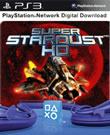
Super Stardust HD (Playstation Network)

Arena, confined
Checkpoints OFF
2 Difficulty levels
5 Stages
Ship speed fixed
- - - - - - -
Developed by Housemarque
Published by Sony in 2007


Back in 1993, a small game inspired by Asteroids was released for the Amiga computer, called Stardust. One year later a revision came out in the form of Super Stardust, and more than 10 years after that a new chapter would appear exclusively for the Playstation Network. Calling Super Stardust HD a new take on the old formula is an understatement, since the new chapter replaced the thrust controls with a twin stick scheme. Coupled with an astounding amount of color and particles rendered in glorious high definition, this gameplay aspect helped make Super Stardust HD one of the most successful titles on the platform. It was even selected as one of the four "Welcome Back" games offered by Sony as a compensation for the series of outages the system went through in April 2010.

It’s easy to underestimate this game if you don’t actually play it, for on the outside it just comes out as another twin stick shooter seemingly developed on the trail of Xbox 360’s exclusive Geometry Wars Retro Evolved. However, unlike its competitor, Stardust HD actually puts all those flashy HD explosions to good use in a game that has engaging gameplay and an actual ending. It also lives up to its hype once you start playing it, something that does not happen with Geometry Wars at all. In my case, the proof is in the fact that I couldn’t let go of the controller until 2 AM the first time I played the game last week – the same day I knew about Resogun, Housemarque’s new title to be released for the Playstation 4 as a spiritual sequel to Super Stardust HD. I guess motivation sometimes requires just the right degree of pushing… right? :)

The objective of the game is to clear the orbit of a planet and wage war against enemy warcraft while doing it. Given the proportion of your ship and the size of the targets you’ll be destroying, each one of the little planets you’re defending sure has an incredible gravitational force at work. As you move around with the left analog stick and direct your shots with the right analog stick you’ll be able to circle the whole planet in a matter of seconds while asteroids and bombs descend from outer space into your flying level. There’s never any interaction with the planet itself, and considering the amount of mayhem the player’s constantly trying to control chances are you won’t have any time to appreciate its beauty. Detailed textures are applied all over the planet and the objects surrounding it, creating an incredible feeling of 3D that does not interfere with the core gameplay at all, which remains restricted to a 2D plane at all times.

Gold melter all the way!
(courtesy of YouTube user LangleyZeroTwo)

Super Stardust HD’s main game mode (arcade) has five stages divided in five sections/phases each. A hidden timer runs for each section, and beating it before this timer runs out yields an extra bonus. At the end of a phase a series of specific enemies appears, meaning you just have to get rid of them for the phase to end. The final phase in a stage always comes with one or more big, powerful bosses.

Of course blowing up stuff isn’t the only rush you get from Super Stardust HD. Green rocks release items that look like opening lids from soda cans. Three of them are responsible for increasing the strength of each weapon: green upgrades the “rock crusher” (spread gun), red upgrades the “gold melter” (flamethrower) and blue upgrades the “ice splitter” (needle cannon). Power-ups keep cycling between them, so just wait to get the item you want if a different one appears. The power of a weapon ranges from 0 to 100% and is shown whenever you collect the corresponding power-up or when you select it with the shoulder buttons (L1/R1). If a weapon is already at 100% any subsequent power-up will temporarily raise it to 200% for greater destructive power. Other items released by green rocks consist of 1-hit shields (purple), extra lives (yellow) and bonus points (white). Extra bombs show up as orange items, and they're always hidden inside crates brought by a slow moving carrier.

Completing the array of inputs available, R2 triggers a screen-clearing bomb and L2 activates a boost command that sends the ship forward while making it invincible. Boosting capability is recharged according to a gauge in the lower left corner of the screen. Bombs and boosting represent the base of the both scoring and survival, and that’s probably the main reason why the game is so addictive: once you get the hang of it, playing for score becomes one with playing for survival. Sure the risk/reward factor is still there, it’s just that very few games unite both approaches (survival and scoring) as perfectly as Super Stardust HD does.

Take boosting, for instance. If you get dangerously surrounded by falling rocks and bombs, use it to evade and focus on surviving until the recharging cycle is complete. Are several white power-ups floating around? Take them all in a single boost dash and see their value get multiplied by 1 + the number of items collected. If you manage to avoid dying and reach higher multiplier levels, boosting through white power-ups can lead to a great amount of points. By the way, the multiplier is shown in the lower right corner and grows automatically as you play, being applied to every single base/bonus score throughout the game. Regarding bombing, they surely serve the purpose of panic evasion whenever needed, but if you refrain from using them you’ll be entitled to higher bonuses at the end of a phase. The conclusion is simple: if going for a higher score don’t bomb, just dash, and don’t die. Die and see that precious multiplier get sent back to ×1. The good news in this case is that you don't lose any power when you die.

Hazardous stratosphere

In order to avoid repetition, the game constantly adds enemies and dangers to each new planet phase. Asteroids are scattered all around all the time and represent the most present hazard, but you also come across different types of crawling creatures, bombs, mines, cannons, saucers, etc. In some phases you’ll notice small asteroids surrounded by decreasing number tags: destroy them all in sequence and get a large green bonus asteroid filled with power-ups. Swift use of weapons also becomes important in later stages because asteroid types get mixed – remember that each weapon is more recommended against the type that matches its name (rock, gold and ice). However, when in doubt I always went with the rock crusher (green), since I think it’s the most effective weapon against all asteroid types. 1UPs are rare items and always turn into shields after a while, so wait for it if you happen to be with a bare ship. Score extends are given with one, 5 and 10 million points, and for each successive 10 million points afterwards.

Even while mind-blowingly simple, Super Stardust HD manages to be incredibly intense and fun at the same time. It’s definitely one of the best twin stick shooters out there, and certainly one to get your toes dipped into if you’re not too familiar with the style. I could only point the generic electronic soundtrack as a letdown, but I can’t be sure if the sound effects are to blame for this impression. Explosions are so abundant it gets hard to pay attention to anything else. Another important aspect in the game is that, unless you're fighting a boss, there's no emphasis in bullet dodging. It's much more about crowd control.

Once beaten, the game loops in a harder difficulty level. In the options you can adjust the look of your ship (absolutely no influence in the actual game) and set the camera view to far (default) or near, but the difference between both is negligible in my opinion. The basic Super Stardust HD package also comes with an extra mode to play single planets/stages and a single-screen co-op option. Three add-on expansions offer split-screen and versus co-op possibilities, as well as several single player modes: endless (no end to enemy waves), survival (how long can you survive a series of indestructible enemies?), bomber (you can only attack with bombs), time attack (finish a planet with the lowest time possible) and impact (emphasis on boosting plus much higher multipliers).

Below is the best result of my sessions with the game on NORMAL. In this run I had my first death during the start of the 4th stage, finishing the credit in the first phase of stage 2-4. Unfortunately there's no way to save high scores locally, but the online leaderboards are especially cool for showing lots of unusual stats for the records displayed there, such as date/time, credit duration, etc.

Saturday, August 10, 2013

DUX Version 1.5 (Dreamcast)

Horizontal
Checkpoints OFF
1 Difficulty level
6 Stages
Ship speed fixed
- - - - - - -
Developed by Hucast / Kontechs
Published by Hucast in 2013


No matter how bad things are, the truth is that they can always get worse. I don't remember who first said this, but unfortunately in the case of Hucast and DUX Version 1.5 the saying fully applies. I don't want to sound like AVGN, but what were these people thinking? Releasing new versions of the same game isn't really a novelty (if Cave does it, why can't we?), but squeezing it to the point where it gets ridiculous isn't healthy for the company's image at all. DUX 1.5 was initially awaited by many Dreamcast fans in the form of a single patch disc that was supposedly meant to reach all buyers of the original game. However, besides being included as an extra in the upcoming REDUX - Dark Matters it was also released with proper case and instructions. Twice. First as a stand-alone piece and then with the rearranged soundtrack one month afterwards.

Naturally, being the avid collector that I am I promptly ordered the stand-alone package. You see, crystal balls don't really exist in the real world. As dissatisfied as I was/am with Hucast, I can at least trust that the REDUX package will include the soundtrack in its limited edition. But alas! Above all I'm a gamer, so on to the game itself.

DUX Version 1.5 is supposed to be a checkpoint-free version of DUX with rebalanced gameplay. This iteration was spawned from the harsh criticism the original game gathered soon after its release in 2009. Even though DUX had flaws, I could live with them just fine. But if you care about sticking to the single best variation of a shmup, in this case I recommend you choose the game's first incarnation. For all it's worth, Hucast mistook the term "rebalanced" for "dumbed down", turning DUX 1.5 into a shameful joke.

Bleed for me

First, the gameplay rules: besides the regular firepower, the ship is able to fire an overriding charge shot with a different button; a permanent force pod is connected to the ship and can be detached/docked at the press of a button (a wider shield can be found later to help protect the ship from incoming diagonal bullets); three weapons can be switched by collecting the corresponding item (yellow = straight gun; light green = bouncing lasers; light blue = wave lasers); auxiliary missiles can be acquired with an item and have their direction switched at the press of a button; "obvious" particles help fill a meter faster with energy that can be used to absorb enemy bullets by pressing another dedicated button, and as long as you have obvious energy and you're soaking enemy firepower bullets can't harm you.

In essence, the basic gameplay here is the same as in DUX. When one thinks about "rebalancing", getting rid of the checkpoints and allowing the player to not continue (by pressing Y at the GAME OVER screen) were certainly the most simple and yet most expected changes in DUX 1.5. Instead of stopping there or addressing what really needed to be rebalanced in the gameplay (charge mechanic, "chain" system/tracking, scoring rules, weapon strengths, power-up colors), all further tweaks were lousily aimed at dumbing down the challenge to ridiculous levels. Allow me to point out some of the rebalancing work:
  • key aspects were eliminated but their corresponding icons were left in the game - checkpoints and missile direction restrictions are gone, yet you keep running into their items all the time (how lazy is that?);
  • you don't die by colliding against walls anymore; even if you get crushed by an obstacle you can't die, the ship miraculously gets pushed forward into solid matter;
  • the force pod is in place from the get go and is totally invincible;
  • the game now starts with 3 lives, but all those gazillion 1UPs and score extends still allow the player to breeze through the game with an inflated life stock;
  • continues are the new checkpoints - instead of starting the stage again gameplay is resumed pretty much where you died your last life (the score isn't reset when continuing).
Pod behavior, weapon strength and overall enemy aggression are unchanged, and given the changes described above I'm not surprised you're still invincible while soaking bullets - the feature still serves more as a survival tool than a proper scoring device, and you still can't track the efficiency of your chaining/soaking. I don't know if the 50Hz scoring bug was corrected, but that wouldn't affect me anyway. The option to turn the game into a TATE vertical shooter was revoked, as well as the visibility settings that made the backgrounds cleaner. While they weren't really needed, I can't imagine why you couldn't have them for curiosity's sake.


The revised gameplay in all its, aham... glory
(courtesy of YouTube user Sukeroku SGAD)

"Isn't there nothing good to say about DUX Version 1.5 then?"

Well, for those who care the game does allow button remapping, and the soundtrack is even better than before. If you consider that being piss-easy is an improvement (especially when compared to the original version), add that to the basket of good things as well. In all honesty, I can't think of anything else besides the fact that this game is perfect for newcomers and children.

Below is the final 1CC high score achieved in a couple of break sessions from a much harder shooting game I'm trying to learn:


Monday, July 29, 2013

Earth Defense Force (SNES)

Horizontal
Checkpoints OFF
2 Difficulty levels
6 Stages
Ship speed selectable
- - - - - - -
Developed by Jaleco
Published by Jaleco in 1991


For a game that causes a little confusion with a couple of different acronyms (such as EDF or Super EDF, which comes from the in-game title), Earth Defense Force is actually a pretty straightforward outer space shooting romp. Please do not mistake it as being similar to the dreadful Earth Defense for the Mega Drive, nor include it in the Earth Defense Force action series released for more modern consoles. The SNES game is a port from an arcade game commonly referred to as EDF - Earth Defense Force, and a decent one at that... if you don’t get too technical on graphics and such and you're not too picky about the suppression of a few sections.

I had a very strange experience when booting the game for serious play this time. There was almost no music and the BGM on the first level was incredibly minimal. Only when I entered the boss fight and the audio went fully silent I figured something was definitely wrong. When I returned to it later on things were back to normal, and I noticed that upon powering up the console whenever the Jaleco logo was absent I would get the same sound problems. And if this happened I had to keep trying (power on/off) until I was able to get the damn thing back to normal... Is my SNES dying by any chance? Or is this particular to EDF? Note: with audio problems the difficulty in the options menu gets stuck on EASY, even though it’s not supposed to be there (regular difficulties are only NORMAL and HARD). I didn't really play the game again on this bastard easy setting, I had to seize the little time I had to play.

Well, so much about bugs, but what about the game itself? Storywise it’s you against an alien threat. Again. This time they have apparently devised a secret super weapon on the Moon, so there you go with your lone spaceship on a mission to save the Solar System.

Above the clouds in Earth Defense Force
(courtesy of YouTube user djgyixx)

Prior to each stage in Earth Defense Force the player has to configure the ship’s weapon, choosing one of eight choices graded according to three criteria (speed, power, firing rate). These weapons are vulcan, laser, atomic, homing, explode, search/seeking laser, photon and grenade. Ship controls allow you to fly at three different speeds and to use the selected weapon in conjunction with two auxiliary satellites that can initially be set to the ship’s nose (concentrated fire) or in rotating formation (distributed fire). Satellites are invincible, block enemy bullets and are also able to damage by contact. Control inputs can be set in the options menu according to six different configurations, and my preferred choice was config #3 (Y for shot, L for option formation and R for speed change).

Some of the most interesting aspects in the game are the complete absence of power-up items and an almost total absence of fixed obstacles. The only few walls you’ll need to worry about appear in the last stage. As for the lack of power-ups, Earth Defense Force uses an experience upgrade system instead, which is tracked by the overhead bar. Killing enemies will automatically fill this bar and increase firepower from level 1 up to level 5. Each level upgrade applies sprite changes to the currently used weapon and increments its firepower. Extra satellite formations are activated once you achieve higher levels: level 3 adds a trailing formation (satellites follow your movement around the screen) and level 5 adds the homing formation (both satellites stand behind the ship, automatically homing on the nearest enemy).  When you get hit you lose one shield and the process of leveling up is delayed a little bit.

Shield, you say? Yes, that’s actually how the game calls your lives. Initially each level starts out with three of them. Every time you get hit the ship smokes for a few seconds, going down in permanent smoke and failure if you get hit on the last shield point (GAME OVER). Acquiring more lives is possible, but only after you reach a power level of 5. When this happens every subsequent filling of the upgrade bar results in an extra shield, a very important accomplishment during later stages.

Earth Defense Force is better than the actual generic package makes it out to be. Stages are a bit long but the fast scrolling and resulting sense of speed in most of them keeps the action going at a reasonable rate. Slowdown ensues here and there but it’s not gamebreaking in any way. The challenge varies wildly depending on which weapon you choose, but if you want to cruise through the first half of the game just go with homing and you’ll be okay. Once the ship is sufficiently leveled up it’s safer to try other weapon types. In any case, the last stage definitely requires another weapon other than homing, or else you’ll spend a long time in the process of killing one of the mid-bosses (his electrical sphere is a magnet for homing shots, thus making the weapon almost useless).

Search laser, search!

Regarding music, I have to say I enjoyed the soundtrack of Earth Defense Force mostly for its heavy use of bass (it’s great). My favorite stage is the third one inside the caves. Good BGM, cool graphics that somehow remind me of Thunder Force III and a purely Darius-inspired boss to close the treat. Ugly mode 7 effects kick in during the outer space approach of stage 4, and that’s exactly where the game starts to get a little bit more demanding. And just when repetition threatens to kill the pace the game throws a shorter last stage to speed things up. Soon enough you find yourself in the final showdown against the aliens, who try to stop you in a series of consecutive boss fights.

Even though there’s a lot to be squeezed from the game as far as weapon choices and scoring goes, there’s no doubt that half the weapons are considerably hard to use. Sure, the satellite formations are there to fill in the gaps of a less powerful gun, but playing the game with a slow-firing weapon requires thorough memorization of enemy patterns. Especially interesting is the photon weapon, which creates a bullet-absorbing shield when used with the concentrated satellite formation.The scoring side of the game is based on a stage bonus that’s proportional to the number of enemies you destroy, but there’s also a secret bonus of 100.000 points to be had if you manage to beat the level without getting hit.

During my 1CC run I used homing for the whole game except in the last stage, where I switched to photon. And here's the final score:

Friday, July 19, 2013

Zed Blade (Neo Geo)

Horizontal
Checkpoints OFF
5 Difficulty levels
8 Stages
Ship speed fixed, selectable at start
- - - - - - -
Developed by NMK
Published by NMK in 1994


Until very recently I knew nothing about Zed Blade apart from its famous “love-it or hate-it” techno soundtrack, composed by the now celebrated Manabu Namiki (Battle Garegga, DoDonPachi Dai-ou-jou, Mushihimesama). Also known as Operation Ragnarok in Japan, the game was originally released on the MVS arcade platform, but soon found its way to the Neo Geo AES home system thanks to the cartridge converting wizards. That’s how I was able to enjoy it.

You don’t need to know the story to realize that as soon as the game starts you’ll be drifting away from Earth into the heart of the Solar System. All levels and bosses have names, and I guess that’s one of the easiest and yet most efficient ways to carve key aspects of any game into the player’s memory. If you play Zed Blade to the end I bet you won’t forget how it depicts names such as Constrictor, Loki and Yggdrasil. And what about a boss whose title is none other than Insane Ship? Unfortunately, the curious names and the great soundtrack represent the peak of whatever personality you will find in Zed Blade. I won't complain about the challenge as well, since it's actually of decent caliber.

Three different pilots define how fast you’re able to move. Uncle Beard is slow, Ms. Charlotte flies at middle speed and Swift Arnold is fast, and while their ships have different sprites they all seem to posses the same hitbox areas. Once the pilot is chosen you must configure the ship’s weaponry in three steps: (1) shot, (2) missiles and (3) rear. There are three options for each weapon, and these include common types such as spread/3-way, wave, straight/twin or homing, as well as a variation with vertical reach for the shot/frontal weapon. I believe that configurations like 3-way/A-S/2-way are the reason why many people see a similarity between Zed Blade and Darius Gaiden. That’s absolutely not true for the rest of the weapons or the game itself, which does not resemble Taito’s epic shooter at all.

Are you ready for the battles?

A single button is used to fire all weapons at once. A secondary button is used to deploy the bomb, a powerful energy outburst that makes the ship invincible as long as it lasts. Upgrade items and extra bombs appear inside certain enemies, which must be destroyed for you to take them. Power-ups cycle continuously through P (shot), M (missiles) and R (rear). All items, including extra bombs, will bounce on the left border of the screen and disappear to the right. The blue bomb item is special because it upgrades all bombs to “hyper” status for the current life (all icons in the bomb stock switch to a shiny green H). It takes three power-ups to max out each respective weapon, and the good news is that you’re downgraded only one level for all of them when you die. Upon every death two random items will appear from the right, so if you’re fast enough it’s possible to regain maximum frontal power almost at once.

The odds you’ll face when armed with the arsenal and resources described above will depend on your life stock, for that’s primarily what defines rank in Zed Blade. 1UPs will automatically come into the screen as soon as you reach 200.000, 800.000 and 2 million points, and if you go on without dying each extra life adds an extra layer of aggressiveness to the enemy behavior. This increase in difficulty results in a much higher bullet density combined with increasingly faster bullet spreads, to the point where deaths almost often happen due to sheer overwhelming and inevitable cornering. Performing well in the first half of the game is a safe pass to a second half filled with tighter patterns and overlapping enemy attacks. The only way to deal with that is to rely on methodical memorization (beware of enemies coming from behind) and panic bombing (don’t be greedy!).

Occasional slowdown might kick in depending on how crowded the screen gets, but it's much more common when two people are playing together. While the basic gameplay and the challenge rules complement each other well, the same cannot be said about two important aspects in the game. The first one is the graphic design. NMK tried to infuse dynamism through several layers of parallax, but when you have stages 3, 4, 6 and 7 with basically the same backgrounds (bar a few asteroids here and there) you can’t help but feel the stench of laziness and lack of creativity. That makes the game seem longer than it actually is and leaves all responsibility for any graphical appreciation on the enemy gallery's shoulders.


Zed Blade's auto demo
(courtesy of YouTube user narox)

The second aspect that kinda falls apart in Zed Blade is the scoring system. Besides the extra points gained for every surplus power-up collected (5.000 or 10.000 points), it relies heavily on the fact that every hit you land on an enemy/scenery results in even more points. That opens lots of possibilities for milking, and while valid this technique just comes out as boring and stupid. Just to have an idea, to score higher in the first stage it's always better to avoid all enemies and focus on hitting the ground only! During boss fights simply avoid hitting their weak spots and point-blank their bodies to no end (bosses don’t time out but at least react on abusive milking by firing unexpected extra bullets). And here's where things get really dumb: rewards for the hit-based scoring vary according to the character used. Uncle Beard gets 50 points per hit and Ms. Charlotte 30 points, while Swift Arnold gets shafted with only 10 points per hit. This is the first time I see a shmup with multiple characters render some of them totally useless for score chasers, and in my opinion that’s just complete fail.

Even with all the aesthetical and functional shortcomings there’s no denying that Zed Blade is a fun shooter, provided you can play it with autofire. At its core the game offers an engaging mix of strategic/twitchy dodging, with a reasonable learning curve that duly considers the seemingly huge ship’s hitbox and keeps players on their toes all the time once you're halfway into the game. Late bosses are cheap (6th on high rank, 7th at all times) and disappointing (last one), but the action in the levels themselves more than compensate for that. And the soundtrack? At some points it might make you want to shake your body a little. It’s awesome.

My 1CC score was achieved with Uncle Beard on the MVS difficulty setting of an AES cartridge conversion, with the ship configured as 3-way/homing/twin (S/M/R). I had autofire enabled (PS2 turbo controller + Tototek adapter) and didn’t do any extensive milking… Just a little to get the first 1UP prior to the first boss and a short beating spell on Lunar Walker’s body.