Monday, June 7, 2021

Xenon 2 Megablast (Master System)

Vertical
Checkpoints OFF
1 Difficulty level
6 Stages (loopable)
Ship speed by icons
- - - - - - -
Developed by The Bitmap Brothers
Published by Virgin Games in 1992


Fondly remembered by fans of the Amiga computer system, Xenon 2 Megablast was quite popular and successful at the time of its release, and soon became available for a few others systems such as the Master System. This 8-bit port actually came out at the tail end of the console's lifespan and roughly a year before the Mega Drive version, and much like its 16-bit counterpart was published exclusively in Europe. My copy is the second one by Virgin Games (a first release by Image Works came out the year before).

Having played the Mega Drive game a few years ago, I never nurtured any particularly good expectation for the Master System conversion. I did believe however that it would fit the console’s capabilities better than it did the Mega Drive’s, provided the porting job was at least decent. Unfortunately even trying out the game proved to be quite difficult since it showed graphical glitches that made it unplayable on any regular 60 Hz Master System console from other regions other than Europe.

Then a few weeks ago I plugged the cartridge on my Japanese Mega Drive with a non-official adapter and bang, the Master System version of Xenon 2 Megablast was finally free of glitches. The time came to venture into a brand new adventure in torture! Even though I could say this particular port shares the same sorry fate of the original with regards to its terrible ageing, it's also important to consider the fact that the development team clearly tried to achieve more than Sega's baby console could handle. 

The impending dangers of the volcano area

Xenon 2 Megablast boasts six slow-moving levels with otherworldly environments and one single song that plays from start to finish, a rearranged take on a music by Bomb the Bass named "Megablast". Although interesting on its own, I’d rather have a few more songs and variety on my soundtrack. At least players can turn off the music before starting the credit if desired, replacing it with some other live soundtrack to go with the game and its subpar sound effects.

Both buttons are used to fire, and the scrolling direction can be reversed by forcing the ship against the bottom of the screen. This is necessary whenever you reach dead ends, and proves inevitable during the maze-like corridors of the fourth stage. Each life comes with an energy gauge that allows the player to withstand some damage before dying. Losing energy happens whenever you get hit or touch enemies and walls, so do your best to memorize the movement patterns of enemy waves and to not get stuck in unsuspected corners. Lives are lost in a snap if you get sloppy, so it's always best to be cautious rather than hasty.

Power-ups can be acquired either by shooting at item containers that cross the screen from time to time or after the stage is over by purchasing them in the shop. Once inside the shop you're first given the option to sell your current items to Colin the alien, then you proceed to the buying section. The initial wallet in the shop corresponds to the exact amount of points achieved in the current level (a simplification from the original game, where bubbles supplied money independently from your score). The game balance around cash is really tight, so try to spend it wisely until the very last cent, after all you can't carry money over from one stage to the next.

One of the few positive aspects about this port is that it can be considered graphically quite faithful to its source, even including a single background layer for proper parallax effect. But that's where the positives end, unfortunately. As the stages progress it becomes clear that the game sliced the original levels in order to extend the stage count to six, yet it doesn't even include all scenes seen in the already butchered Mega Drive port. There are no mid-bosses and only two recurring main bosses appear, the nautilus in the odd levels and the crab in the even levels. My general impression of the game is even more dire than those I got from the Mega Drive version: it still feels like navigating through mud at the mercy of erratic enemies, but their attacks inexplicably do not obey frame rate limitations like your sluggish ship does. The result is that you might be bombarded with bullets you can barely see coming, so be ready for another painful exercise in frustration and patience.

A brief section of the first stage in Xenon 2 Megablast for the Master System
(courtesy of YouTube user The VideoGames Museum)

My strategy for power-ups was to get side shot, autofire and the last power-up on the first shop, then on further opportunities acquire laser and spend the rest of the money on health refills and whatever I still missed of side shot and autofire. Some of the upgrades can be bought more than once, which means they have more than one level of power/efficiency. I didn't bother purchasing double shot, cannon or the useless super Nashwan power, which lasts for ten seconds only at the start of the level and isn't really that "super" once you realize how much more potent a laser-equipped spaceship is. Make no mistake though, no matter how powered up you are you'll never really feel comfortable to tackle the enemy swarms in the last couple of levels. Memorization and clever positioning are still the best strategy you can come up with in order to succeed in Xenon 2 Megablast for the Master System. 

All things considered, including the atrocious frame rate which drops to a crawl whenever the screen gets too cluttered, the game does offer a challenge that's tightly tuned around its design choices. Some of the special items to be purchased in the shop serve as examples: extra lives are so expensive that in certain levels you won't even get enough money to buy one. Since there aren't any score-based extends, unless you sacrifice precious firepower along the way you'll pretty much have only three lives to complete the game no matter what. At least the appearance and consequent opportunities to use the zapper smart bomb seem to be more reasonable this time around.

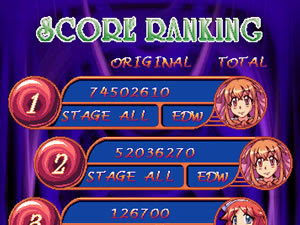
Beating the top spot in the high score table requires you to at least loop the game and advance a few more levels. Once I did it I was able to reach the 6th stage again (level 2-6) before dying my last life. There's no increase in difficulty on the second round, it's the same endurance test all over again.


Thursday, May 27, 2021

Vastynex (PC)

Horizontal
Checkpoints OFF
1 Difficulty level
6 Stages
Ship speed selectable
- - - - - - -
Developed by Kigekiyahonpo / Zakichi
Published by Kigekiyahonpo / Zakichi in 2018


The horizontal shooter subgenre has come a long way since its formula was created and soon perfected in the golden era of the arcades. Gradius, R-Type and Darius can easily be considered the classic trio of quintessential horis, yet console games like Thunder Force IV were certainly responsible for cementing the genre's widespread recognition in the home market. What if we had a game that merged all of them in a single adventure full of action and accompanied by a kick-ass soundtrack? Well, the name of this game is Vastynex, and it's free to play in any PC if you just head to the developer's website and download it.

For those familiar with the titles mentioned above, Vastynex is certainly an amusing trip down memory lane. While it's basically a ripoff that would never get a commercial release due to copyright infringements, on the other hand it's truly a wild ride marked by the unique choice for huge pixelated sprites, always mimicking enemies and particular sections from classic games. The pixelated aspect might be an acquired taste for some, but I urge readers to give it a chance in order to check for themselves. Don't go by remarks such as the one made by my 4-year old daughter when she entered the room and caught me playing it, saying the game looked like Minecraft. :)

The main starting point for the structure of Vastynex is definitely Thunder Force IV, but pretty much all games in the series are used as basis for the design, especially Thunder Force III and Thunder Force V.

Pixels galore!

Once you run the executable, pressing ENTER will make it go fullscreen. Inputs are automatically assigned to whatever controller you have plugged in at the moment: for my Xbox 360 wired controller I got shot on button A, weapon select on button X, speed switch on button Y and pause on the right bumper (RB). The gameplay follows the same old rules from the Thunder Force games, where you must collect items to power up the ship. The main one is the claw/craw that creates two rotating orbs that expand your firepower, whereas other icons provide weapon activation or upgrades for blade, rail gun, snake/fire, wave and hunter (cool detail: each weapon is taken from a different chapter in the franchise). Shields provide protection against three hits and extra lives are scattered or hidden around the scenery (you also earn extends at every 2 million points).

Since Vastynex isn't graphically demanding and works on pretty much any PC, the game runs pretty fast with absolutely no slowdown whatsoever. The scrolling speed varies a lot and gets mixed with a wide range of explosions and several bits of short animation transitions, to the point of overwhelming players at first sight. Adapting to the speed of the game is essential if you want to achieve more points, after all the scoring system is based on speed-killing enemies just like in the mechanics used in Thunder Force V, albeit with a little twist.

In every level the base multiplier must be increased from ×1 to ×8 by killing enemies as fast as you can. Afterwards it's just a matter of continuing to dispatch enemies in a timely manner to maintain a high multiplier. Pretty much all mid-sized and larger enemies, however, offer higher multipliers if dispatched quickly, up to ×32 (they're all indicated by a lock-on reticle in their center). Finding the best weapon to use is, as usual, the key to a better scoring performance. Another important scoring device consists of maxing out weapons by taking two items of each one, which then makes all further items worth 10.000 points when collected. A red border in the weapon array indicates if said weapon is already maximized, and if at least one of them isn't red you'll get only 1.000 points for each surplus item.

A "no-miss" bonus of 100.000 points is awarded for each level where you don't take any damage whatsoever. A more accurate term woud be "no-hit" because if you're hit when using a shield you won't receive the bonus. Hovering the ship or flying though certain unsuspected areas is another source of points, so it's always good to venture in unusual places as the screen scrolls.

An exquisite self-imposed challenge on one of the bosses from Vastynex
(courtesy of YouTube user yoss88)

Each extra life is worth 10.000 points when completing the game, a value that seems to be quite low in comparison with any similar bonus you'd get from a Thunder Force game. As expected, deaths take away the current weapon you're carrying, but in Vastynex you can recover it at once by taking the special item that starts bouncing around afterwards (if it appears, of course). While the abovementioned extra life bonus doesn't seem like much in the final game tallying, it's important to note that dying resets the base multiplier and depending where that happens the overall score might be severely affected. 

It's quite clear that the scoring side of Vastynex adds an extra layer of joy to a game that's regularly not that hard, particularly for those who're familiar with the Thunder Force series. For example, many boss aspects and patterns are pretty much the same, while bosses themselves are mixed with enemies from other franchises such as Darius. There are stage sections modeled after Aero Blasters and Darius II, but the whole collection of references is a real delight for shmup fans. Some that spring to mind as standouts are the appearance of R-Type's Dobkeratops mixed with Thunder Force III's Gargoyle, Gradius II's Shadow Dancer in vertical form and the triad boss formation of Vic Viper, Silver Hawk and the R-9. Diehard conoisseurs will also spot minor details, such as the ice curtain from the first stage of Gradius Gaiden or the bomb animation of Darius Gaiden during the death sequence of Great Thing.

The picture below shows all the results of my credits on the latest update of Vastynex (version 1.2a), with the number one spot achieved in a no-miss run. During this quick burst of great fun I tried my best to take advantage of the scoring possibilities, but did not perfect routes and strategies on secrets and bosses. Maybe next time!


Friday, May 7, 2021

Cosmos Cop (NES)

Rail shooter
Checkpoints OFF
1 Difficulty level
6 Stages
Ship speed fixed
- - - - - - -
Developed by Mega Soft
Published by Gluk in 1991


Even those who have not lived it somehow know that the 80s was an awesome decade, especially when talking about video games and the delight they provided kids at home. The NES specifically was an endless fountain of fun for pretty much everyone, but even the best electronic systems couldn't deliver great games only. They also had their share of average titles, as well as the truly bad cartridges almost no one would dare to rent or buy. And then there were those games released by companies such as NTDEC/Mega Soft/Caltron, which in mediocrity terms are in a category of their own.

The more you dig into any video game library the more you learn, and this is as true now as it was back then. NTDEC wasn't on my radar as a child, therefore here I am very late to the party to share my less than enthusiastic impressions of yet another unlicensed product from the company. A rail shooter marketed at the time as having the same thrills as Sega's amazing Space Harrier, Cosmos Cop is another demonstration of the lousy work from some of the same people who delivered stuff like Magic Carpet 1001 (just check the end credits to see it). Although it can't really be qualified as torture, it does stand out as a truly shabby effort that smears the genre's flair for excitement and wonder.

The terror legion from alienation space invaded galaxy!
(courtesy of YouTube user DarkMurdoc666)

Cosmos Cop puts you inside a giant mecha that flies forward in a mission to save the galaxy from outer space scumbags. It’s a simple game with a simple objective: to defeat a giant boss after five short levels of straightforward shooting with very little variety. The scrolling surface never changes from its initial dark blue color, only the background in the distance does in order to reflect the themes for each stage, which is always preceded by a quick message describing the next mission. The first level is a "defensive" area, followed by a flight towards volcanoes, an enemy arsenal, an energy station, the mandatory end-of-game fortress and of course the final boss. This last enemy, in fact, seems to have been the object of most of the design efforts because it's got a really creepy and menacing look. Honestly speaking, it's the single highlight of the whole game.

Button B fires your regular cannon (with autofire) and button A deploys the so-called neutron missile, a supposedly more powerful attack that has limited ammo and no autofire. Each life comes with an energy gauge that allows you to take a few hits before dying. What's particularly weird about Cosmos Cop is the way enemy bullets are fired at the player. They deviate from the norm in that all projectiles explode into cross or × shaped patterns of four bullets that spread out in varying angles according to the enemy that fired them. In that sense, it's not enough to just dodge. You also need to keep your space until all expanding bullets have cleared the area.

Due to the peculiar nature of the enemy fire, losing lots of energy in a short period of time during a quick bullet shower is quite common in the beginning. Lost energy is recovered by collecting the P icon that approaches floating by (the only item you'll come across in the whole game). Besides refilling the energy gauge, this icon is also responsible for adding a few more neutron missiles to the stock. Energy is fully replenished at the start of a new level as well.

As I mentioned above you don't face any sort of boss until you reach the end of the game, but it can be quite hard to preserve health and not die on the way. The good news is that you're granted with an extra life for every 10.000 points you score. If it weren't for this somewhat merciful extend routine Cosmos Cop would certainly be more a challenge, regardless of how bare bones it looks like with all those generic formations of saucers, drones and rocks. At least it scrolls at a decent pace and doesn't incur in any slowdown or flicker.

The impending dangers of the volcano area

In the constricted realm of NES rail shooters it's very easy to mistake this game for Cosmic Epsilon due to their names looking alike. However, while Cosmos Cop's stale experience fails to leave any lasting impression, Cosmic Epsilon might possibly be the best 8-bit rail shooter ever created. Just take note of that if you happen to stumble upon both of them in any game discussion or in your next garage sale. Note that besides the standalone Spanish release by Gluk, Cosmos Cop is also included in the famous Caltron 6-in-1 multicart.

I beat Cosmos Cop in my first attempt playing it, but wasn't fast enough to pause and take the picture of my score (there's no hi-score buffering anywhere and the game halts at the credits screen). Then I played it once more and got a better result, shown in the picture below. It was quite quick, after all a full credit lasts about just 12 minutes!


Tuesday, April 27, 2021

TwinBee 3 (NES)

Vertical
Checkpoints OFF
2 Difficulty levels
5 Stages (loopable)
Ship speed by icons
- - - - - - -
Developed by Konami
Published by Konami in 1989


The last game in the TwinBee franchise to be published as a Famicom exclusive, TwinBee 3 - Poko Poko Daimaƍ never made it to Western shores as did Moero TwinBee / Stinger. Perhaps Konami had a gamer like me in mind when dealing with the series out of Japan, after all I never really cared about its gameplay and the whole concept of a cute'em up where you're supposed to be juggling bells at all times. There's something about this mechanic that doesn't quite click with me in the first entries of the franchise (my perception about future chapters such as Pop'n TwinBee is vastly different though).

That said, one of the most important things to be said about TwinBee 3 is that it returns to the roots of the series by offering vertical stages only, as opposed to the mix of horizontal and vertical levels seen in Stinger. In Famicom terms it plays just like the original TwinBee, only with some changes here and there. Cute and surreal enemies storm about from everywhere in the most erratic movement patterns amidst clouds that release colored bells when shot at. Commands are the basic combination of shot (button B) and ground bombs (button A), but a turbo controller comes in very handy since the game lacks autofire.

Lots of hive-like terrain ahead

Trying to go all the way with the default pea shot in a snail's pace is of course not the correct way to enjoy the game, so one of the first actions you need to take is get a blue bell for a welcome speed boost. The main bell color is yellow, with all other colors appearing after they take a few shots. However, in TwinBee 3 the amount of bells initially generated in blue color is considerable, so flying fast can actually be quite hard to avoid at times. In fact, the feeling I got in this chapter is that it's quite easy to get multiple speed-ups and start moving at breakneck speeds all over the place (the HUD even keeps track of the amount of speed-ups you get).

Keep hitting the bells to see more color variations besides yellow for the following functions: blue (speed-up), white (double shot), red (piercing laser shot), flashing red (trailing options) and flashing blue (shield barrier). Yellow bells serve the single purpose of scoring since for each one grabbed without letting any go down the screen you score 500, 2.500, 5.000 and then 10.000 points (max). Other bell colors do not influence the yellow bell combo, so there's no need to rush in order to juggle a blue bell that's far away or almost out of reach.

Besides the bells, other items can be uncovered by destroying ground targets with bombs. Most of them, such as fruit and money, result in a few extra points, but some items yield better rewards. The bottle gives an extra life, the candy gives you a 3-way spread shot, the question mark might destroy all on-screen enemies (not always), the match sets fire to the next bell for a lengthy period of invincibility and an old man's head gives access to a bonus cloud area once the stage boss is defeated. The old man is actually dr. Cinnamon, the game's villain who has kidnapped Gwinbee and prompts TwinBee and WinBee to go rescue their friend, solo or in a cooperative mission. 

A crazy TV ad for TwinBee 3
(courtesy of YouTube user Satoshi Matrix)

The lower option in the main screen sends the player to the options menu (see translation below). Besides selecting the difficulty between Easy and Hard, you can also choose the character (TwinBee or WinBee) and the order of the first four levels. One of the main differences between both difficulties, aside from the expected enemy opposition, is the fact that the ambulance appears as many times as needed on Easy. In regular TwinBee fashion, the ambulance shows up after you've taken two hits, restoring the character's arms once collected. In the Hard difficulty the ambulance appears only once, so losing the arms again afterwards will make it impossible to hit ground targets.

A feature that expands upon the ambulance gimmick in TwinBee 3 is the "soul recovery system", which leaves behind a ghost of the character that slowly moves upwards when you lose a life. Take it and you'll recover whatever upgrades you had prior to dying. While it's certainly helpful, sometimes it's impossible to pick it up when you die close to the top. There are also times when it doesn't appear at all, mostly during later loops in the Hard difficulty. Just like in previous entries, powering up the character with anything that takes it off its default condition accelerates the music into a new tune that remains playing until you lose a life.

Option menu translation for TwinBee 3
 
With sceneries that vary from the staple floating islands of the first stage to a psychedelic mix of checkerboards full of cannons in the fifth and final level, TwinBee 3 veers into something a bit different in its middle areas by showing a medieval setting in stage 3 and a coal mine where rail carts slide while shooting at you in stage 4. The last couple of levels is particularly demanding as far as survival goes, so it's always good to memorize where you can get fire matches and extra lives from ground targets.

After firing up the cartridge I went straight into Hard difficulty. While certainly tough in its own terms, my feeling is that most of the difficulty stemmed more from the choppy scrolling than the gameplay itself. If I had to choose a favorite NES entry in this series I'd definitely pick Stinger, yet TwinBee 3 might certainly shine more in the boss gallery department, which is totally wacky and seems more fitting to a Parodius chapter than a TwinBee game. Since extends are earned regularly with every 100.000 points you score and there's no change in difficulty whatsoever after you beat the game, I looped it four times with TwinBee and gave up at the start of the 5th round (stage 5-1) with the score below:


Wednesday, April 7, 2021

Exzisus (Playstation 2)

Horizontal
Checkpoints ON
4 Difficulty levels
4 Stages (loopable)
Ship speed fixed
- - - - - - -
Developed by Taito in 1987
Published by Taito in 2005


I always thought highly of well-made compilations of classic games. And one of the truths about this is that few of them compare or even come close to the sheer value provided by the discs Taito released for the Playstation 2 under the Taito Memories and Taito Legends monikers. Amongst the usual company flagships such as Darius Gaiden and Rayforce you'll still find interesting shmups to spend some time with. One example is Exzisus, a rather primitive yet fun horizontal shooter that appears both in Taito Legends (US version) and Taito Memories II - Vol. 1 (Japan version).

Even though Exzisus does have some sort of uniqueness to its gameplay, it’s obvious that the game has either predated Darius by a few months only or was developed concurrently with it. You can easily notice that in the way enemy formations are handled, how the ship form resembles a broken/sliced Silver Hawk and how one of the bosses actually looks like Dual Shears despite being a giant scorpion. Exzisus takes a simpler approach to backgrounds but the same raw, otherworldly quirkiness about the graphics also apply. Just note that the version in the Taito discs is the "conversion kit" variant, not the dedicated cabinet one. Differences between both can be checked in this page.

Exzisus is about a flying robot that’s capable of turning into a spaceship on the fly, in pure and glorious Transfomers-like style. Whenever you're respawned you materialize as the robot, a form that allows you to fly and to walk/crouch on ground level. Only two buttons are used to play the game. The first input fires both the main shot and the missiles that come out from the robot's jetpack, while the secondary input launches forward any options you might have acquired, which hover above the robot in the form of an eagle (above) and a dog (below). Options are acquired with the O item, released by destroying item carriers that appear from time to time.

"My brothers enlisted in the Bacterion empire and left me here alone to die!!"

Besides the options, other available items in the game are D (spread shot), L (laser shot), M (missile upgrade), F (autofire), dark D (smart bomb) and A (aerodynamic transformation). The two weapon types you can actually use are spread and laser, which get upgraded by picking up successive items of the same kind. The same is valid for missiles, which evolve into ground trailing missiles and then homing/heat-seeking missiles. The A item is the one that causes the transformation from robot to ship form, also causing any existing options to sink into the ship's hull. If you get hit in ship form you'll revert back to robot, and upon being hit as a robot you lose a life, respawning in a previous checkpoint.

Each level in Exzisus is split in half by an intermediate section where the player needs to deal with a special kind of obstacle. In these areas you'll be flying amidst meteorites, falling ice blocks, moving barriers and expanding spores. The difficulty increases accordingly, with the final stage being naturally the trickiest to get through. Normally there's no need for heavy memorization since the game does not include physical obstacles of any kind except for the aforementioned midde-stage areas and the ground itself: scratching it slightly when in ship form is admissible, just don't lean into it otherwise it'll count as a hit and you'll be sent back to the robot form.

Between the primitive yet functional graphics and the decent dodging action with enemy waves arriving from all sides, Exzisus is reasonably amusing despite a few awkward details. From very early on you need to get used to the way missiles are fired, for example, and you also need to adapt to the hitbox when in ship form (it looks larger than it actually is). The robot has a much larger hitbox but doesn't incur in a severe handicap during the stages themselves, and lest size becomes a problem you always come across an A item prior to boss confrontations.

A gameplay aspect that can be regularly exploited when in robot form is the fact that both mechanical helpers are able to block and absorb enemy bullets. Besides, there are instances where launching them forward repeatedly is quite helpful, either in robot or in ship form. The first extend is granted with 150.000 points, and further ones come in intervals of 200.000 points.

One quick credit in Exzisus
(courtesy of YouTube user zxspectrumgames4)

Progress in the level is measured by a "map" gauge on the upper corner of the screen. At the end of the level it changes to "dmg" to indicate the health of the boss. Speaking of which, bosses are in a league of their own as far as campy design goes, even though they're not exactly pushovers when it comes down to the amount of bullets they're able to fire against you. I giggled the first time I saw the gold moai (which is a far cry from the most famous moai in the shmup world) and its incredible moving ability in the first level. The mechanical yeti in stage 2 doesn't fare much better, the red scorpion in stage 3 is the one that looks like a boss straight out of Darius and the violet salamander looks nothing like the sort, resembling a giant cobra instead.

Click for the option menus translation for Exzisus on Taito Memories II - Vol. 1

Cheese and camp aside, the game is enjoyable enough and a worthy predecessor to later shmups with similar visual or functional elements, such as Android Assault, Heavy UnitSpriggan Mark 2 - Re-Terraform Project and several titles in the Macross franchise. However, when going for the Playstation 2 as the platform of choice players should be aware that the Japanese disc allows full button remapping, unlike the Taito Legends release. Furthermore, upon testing the game in the latter I noticed it stutters during the asteroid shower of the first stage, which of course points to the fact that this particular disc isn’t the optimal choice to play the game. In fact, if you need to choose between regions you should always go for the Japanese releases in this case, there’s absolutely no doubt about it.

I reached stage 2-3 of Exzisus in my best high score on Normal difficulty. The scorpion boss spits out way more bullets the second time around, and losing the ship form while fighting him makes everything nigh impossible.


Saturday, March 27, 2021

Jikkyou Oshaberi Parodius - Forever with Me (Saturn)

Horizontal
Checkpoints ON
8 Difficulty levels
8 Stages (loopable)
Ship speed by icons
- - - - - - -
Developed by Konami
Published by Konami in 1996


For those people who wondered what Konami was thinking when developing and releasing the fourth chapter of the Parodius series for the Super Famicom in 1995, the answer actually came quite quickly. As usual, the game was just too good to be restricted to a single console platform, so the company soon ported it to the 32-bit generation with the added subtitle of Forever with Me, whatever that's supposed to mean. On the outside it looks and plays just like the 16-bit original, albeit with a few standout changes in the core game that are obviously aimed at turning it into a better experience overall.

The aspect that gives Jikkyou Oshaberi Parodius - Forever with Me its name is a comical announcer who’s always babbling random stuff (in Japanese) as the game unfolds. An extra female announcer is also present in the cooperative 2-player mode, which is one of the most prominent novelties of both 32-bit ports since there is no co-op in the Super Famicom version. Being able to tag along with a partner probably makes this particular chapter the best one for sheer co-op fun because of three things: a character roster that allows for great combinations of powers and abilities, the complete absence of slowdown and the difficulty level being the same as in the 16-bit original.

Doitsu on manual power-up mode
(courtesy of YouTube user The VideoGames Museum)

On top of the nonsensical and colorful design that had its details touched up a little bit, the Saturn version also comes with a few other changes (keep reading). The core gameplay remains intact of course, as defined by the classic mold first introduced in the Gradius series. If you decide for manual power-up mode after selecting the character (the lower option), you'll have to press a dedicated button in order to activate the upgrade that's highlighted in the weapon array, which gets shifted to the right as you collect power-up capsules. By choosing auto power-up mode the game does the upgrading automatically for the player, but it's still possible to activate the upgrade yourself if desired, such as when you want to have more speed. The other inputs are shot, missile (which can be combined in the same button, of course) and bell power.

As all Parodius fans know, rules on the use of bell powers are inherited from the TwinBee franchise. They are either generated periodically in between capsules or released in batches by mid-sized enemies, and come in the following colors: yellow (score), blue (bomb), green (instantaneous inflation + invincibility), white (bullet-cancelling kanji shot), red (three energy barriers) and purple (turns all weak enemies into power-ups and/or bells). Shoot the bells to juggle them and switch their colors, just note that it takes four shots to change from yellow to the other colors in sequence. As one of the main sources of scoring, yellow bells collected in sequence soon max out at 10.000 points each, provided you don't let any bell get past you.
 
In between regular power-up capsules and bells you also get gray capsules that work as smart bombs. Don't use them if you want to get the scores from the kills though, because all enemies wiped out with the gray capsule yield no points at all. That said, the other main source of points besides bells are the secret fairies that must be uncovered by shooting at their locations. Each one is worth 10.000 points, and if you're the type of player who cares about completing extravagant achievements you can strive to collect all 70 fairies to unlock secret character Dracula-kun, and then a whole new set of 70 faiires to unlock its sibling Kid Dracula. Fortunately it's possible to take a shortcut by means of a secret code if you want to add these extra characters to the default 16.

Relatively easygoing when compared with the arcade games in the series, Jikkyou Oshaberi Parodius does not deny its console sensibilities and is probably the perfect chapter for immediate "pick up and play". Inspirations from several Konami titles abound, and not only related to the shoot'em up realm. Tokimeki Memorial, The Legend of the Mystical Ninja, Lethal Enforcers and Taisen Puzzle-Dama are used as themes for complete stages, with the later two being reworkings or completely new ventures on the Saturn and Playstation versions. New details on enemies and bosses, minor graphical enhancements and a few shifts in the CD-quality music are also in place.

Pentaro to the rescue

Going beyond the basics, high level play also involves the convenient use of the purple bell, which was introduced in Gokujyou Parodius but is absent from Jikkyou Oshaberi Parodius on the Super Famicom. Another important alteration in this regard is that the extend routine is not interrupted when you score more than one million points. The first extend comes with 20.000 points, with new ones awarded for each 100.000 points afterwards. It's not uncommon to amass a huge amount of extra lives if you play well enough, which obviously helps in reaching higher loops more easily. Since the difficulty increase after you beat the game is also a tad tamer than what you'd get in any of the arcade titles of the franchise, chances are you'll be facing a dedicated Parodius marathon type of challenge on the first two rounds/loops at least.

As expected, this port also preserves the checkpoint-based save function. When you pause and press L, the middle option contains three save slots while the upper option is used to load them at any time. Pausing and pressing R, on the other hand, allows you to return to the title screen on the lower option. A tiny in-game improvement appears in a new display just below the indication for the hi-score, which shows the current difficulty level and loop. In the title screen you also have the choice of two new special game modes: Omake 1 is a completely new single stage where you're supposed to get high scores, whereas Omake 2 works as a racing mini-game where the objective is to get to the end of the area as fast as possible. 

Click for the main menu translation for the Normal game in Jikkyou Oshaberi Parodius - Forever with Me on the Sega Saturn

Even though on a first glance both 32-bit ports are very similar, there is a specific switch in the options screen that alters the gameplay significantly. In the case of the Saturn version, this tweak is called "Extra". Its function is to change enemy formations completely, an alteration that makes the game a tad harder than usual. On the Playstation port this is replaced by "Accident", which adds polygonal-based bonus areas to the end of each level. Besides these interesting tweaks to the base game, both ports allow the OH! bogus power-up to be replaced by a slot machine for bells if you turn "Slot!" on. As for "Duet", "Ikari" and "Nage", they are specific tweaks for co-op play.

Once I got re-acquainted with the game I decided to play with Upa (the baby boy) and got the result below in one of my first serious credits. I played with auto power-up on full defaults (difficulty 4, Roulette ON, Slot!/Extra/Revival OFF, Oshaberi ON) and reached stage 3-6. I had great fun and felt so comfortable with the automatic handling of my upgrade capsules that I didn't even try to play the game with manual power-ups. I did activate a second speed-up right after the first one though.


Now I guess I'm ready to move on to one of the ports for Sexy Parodius!

Sunday, March 7, 2021

Eden's Aegis (PC)

Vertical
Checkpoints OFF
1 Difficulty level
5 Stages
Ship speed fixed
- - - - - - -
Developed by X.X Game Room
Published by X.X Game Room in 2010


Eden's Aegis is the last PC free shooter released by the enigmatic one-man development institution known as X.X Game Room. It's easy to mistake it for Eden's Edge, which is actually one of his first attempts at creating a challenge for those who enjoy the thrill of dodging bullet curtains. For the record, 1.11 is the definitive iteration of Eden's Aegis, so that's what everybody's been playing for years now.

It seems the original page from the developer is offline at the moment, so just head to the download page and extract the downloaded file, plug in your favorite controller, run the executable, hit OK on all pop-up boxes and there you go, bullet hell action instantly available. With obvious influences from the works by Cave, Eden's Aegis can be defined simply as a shooter where your main objective is to destroy larger enemies in order to cancel bullets, thus turning them into precious gold and surviving the odds in the process.

Graphically the game is very similar to the other main work by X.X Game Room, Blue Wish Resurrection and its Plus variation. And that’s probably my main gripe with it, since apart from the choice of the avatar being a flying girl instead of a spaceship both games bear a strikingly undistinguishable appearance, which is very much defined by open space punctuated by raw textures for ground surfaces and a fireworks display of medals and bullet patterns. Of course this is alleviated by the fact that we’ve been given the chance to play these very fine shooters for free, so no big qualms about that.

One could say these games are all about gameplay, meaning 100% substance over style.

Beautiful purple bullet curtains!

Inputs work with shot, full auto, special attack and bomb. By holding shot you get a focused firing stream with reduced movement speed. The special attack adds a concentrated burst of power to your shot pattern that lasts a few seconds, which then recharges automatically for the next use as seen in the meter on the bottom left of the screen. The bomb is self-explanatory, granting instant invincibility to the character during its animation. Autoguard is a feature that’s turned on by default and sacrifices one bomb for every hit you take. “Wait” is initially also set to ON and means that you’ll always have slowdown whenever bullet count reaches a certain threshold (set it to OFF if you’d like to experience a much harder game overall).

In all game modes there are originally only two characters available. You can either beat the game with them to unlock the other two or just create an empty .txt file on the game’s directory named “yutori”. All four exhibit different traits for firing patterns, bombs and recovery times for the special attack. In general the further down they are in the selection screen the harder it is to control them, which means Nanathy is the character to go for beginners while Ridmie requires a deeper knowledge both for survival and for scoring.

The rules of gameplay are the same for all modes (Heaven, Original and Hell). Enemies release golden gems for taking, and if you kill them with special attacks all medals are automatically sucked into the avatar. Death explosions of larger enemies turn every nearby bullet into gems, in what’s the most obvious device in the risk/reward scoring technique: kill them right away to survive or let them live long enough in order to reap more points from on-screen bullets? The good news in that regard is that you'll see health bars for all enemies that are at least mid-sized. Gem counter increases during the level and decreases during mid-boss fights (faster) and stage boss confrontations (slower), getting cut in 1/3 for every hit you take. 

Hidden ground items, such as extra bombs and a solitary extend in stage 4, will only be uncovered by hitting them with the special attack. Bombs are also very important for scoring since they turn all on-screen bullets into gems. Score-based extends are granted with 7 and 30 million points.

Hell mode's first stage with Nanathy
(courtesy of YouTube user Vysethedetermined2)

Like all previous titles from the same developer, Eden's Aegis is a great pick-up-and-play shmup that provides instant fun from the get go, at least in Heaven and Original modes. Enemy projectiles aren't overly fast, the constant slowdown can be considered a nice exercise in tight bullet hell practice and you can even hold the special attack button so that it's repeatedly deployed after each recharge cycle. For a regular bystander the difference from relaxed survival play and high level scoring attempts seems to be trivial, but it actually requires thorough route/positioning choices and tight usage of the special attack. Never mind switching wait or autoguard to OFF, since they do not affect any aspect of the game with regards to scoring.

During the very short time I played the game I cleared it a few times in Original mode, improving my score a little without training any particular section. Eden's Aegis does include practice options though, as well as stage select and the ability to change the color of bullets and save replays – you just can't pause, for pausing denies replay saves and goes as far as not allowing you to write your initials in the high score board. The game does warrant a lot more dedication than the short spell I was able to devote to it, but at least I had good unrestricted fun. My character of choice was Nanathy.


Note: I didn't try Hell mode at all, which is the only one that has a TLB (True Last Boss) in the end, accessible by 1CCing and having at least one bomb in stock when the fifth boss is defeated.