Monday, February 13, 2012

Fire Shark (Mega Drive)

Vertical
Checkpoints ON
3 Difficulty levels
10 Stages (loopable)
Ship speed by icons
- - - - - - -
Developed by Toaplan
Published by Dreamworks in 1990


Also known in Japan as Same! Same! Same!, Fire Shark is the supposed sequel (spiritual or not) to Flying Shark, called in some parts of the world by the name Sky Shark. The game represents an early peak of one of the branches in Toaplan’s creative styles, the one related to an earthly aircraft battling all sorts of enemies in a war setting. Graphically rooted in reality and far from the growing sci-fi trend that was taking over arcades at the time, Fire Shark features more of the same familiar environments and enemies previously seen in its predecessor and in titles such as Twin Cobra, Taito’s Fighting Hawk and Capcom’s 194X series.

The Mega Drive port was handled by a company named Dreamworks, which has absolutely nothing to do with the more famous Dreamworks, maker of animated movies. Regarded by most people as a good conversion, Fire Shark for the Mega Drive is certainly the more colorful vertical Toaplan port in the system alongside Truxton. The long levels, the slow pacing (only Twin Hawk feels slower) and the milder difficulty all make it one of the best choices to get acquainted with Toaplan’s vertical shooters on the Mega Drive. As a consequence, boredom is a risk some of the more seasoned players are bound to face. Biplanes and tanks might be a bit out of fashion these days, but those who cherish the blossoming days of the scrolling shooter will feel right at home here.

Fire Shark, the superpowered biplane!

Items are released by small zeppelins that approach slowly from the top and by selected medium-sized enemies. Three power-ups (P) are needed to increase the plane’s firepower, with a total of three upgrade levels. This means that you have to collect nine P items to achieve maximum power. Surplus power-ups will serve as future upgrades when you die, so instead of starting the next checkpoint with a bare craft you’ll actually respawn with a slightly more powerful plane. Selecting the type of weapon is independent from the upgrading process and is only possible with the colored icons that bounce around for a while before leaving the screen. Blue (default) is the regular vulcan pattern, red generates a menacing fire beam and green activates a wave shot. At maximum power most people tend to prefer the red weapon due to its side and rear coverage, but my favorite one is the vulcan. It’s simply devastating at point blank distance, with a great performance against enemies coming from the top (red has dangerous dead zones and green lacks side reach).

Autofire is disabled by default but can be enabled at the options screen. Fire Shark is a bit weird with autofire because the shooting rate given by the game is awfully slow, especially with the blue weapon. The red flame is naturally immune to this, while the green wave is powerful enough to override it. In later power levels, however, vulcan becomes a killer weapon regardless of the autofire rate. In general, having a favorite weapon leads to tense moments because the game eventually throws lots of unwanted colored items on you. Take'em or dodge'em? Either way things will heat up a bit, at least for a little while.

Speed is increased by taking annoying S items that tend to bounce closely around the edges of the screen. The good news is that speed-ups stop coming once three of them are collected, so don’t worry about getting too fast. B stands for an extra bomb and is the most important aspect of the scoring system. When a stage is completed the bomb stock serves as a multiplier for the amount of bolt-shaped icons you have collected. Huge bonuses can be achieved if you manage to reach the maximum bomb stock of 10. On the other hand, zero bombs mean absolutely zero bonus.

Powering-up, stocking more bombs and not dying are great for scoring. However, a good performance is always followed by the inevitable rank progression: enemies shoot more often and their bullets get increasingly faster. This is particularly noticeable after you die and have to restart with reduced power levels. More than anything else though, death has a devastating effect on scoring. This happens because extra lives are obtained by the dozen... Besides granting a first extend with 70.000 points and a new one for every extra 200.000, the game will kindly throw 1UPs and 2UPs every once in a while. As you gain more experience life stock gets so high that it might take a long time until those red planes start disappearing again. It's this benevolence that takes Fire Shark down a notch in the difficulty meter for Mega Drive Toaplan ports.


Stages 1 to 3 - note: red weapon does not appear correctly in the video capture
(courtesy of YouTube user PickHutHG)

Occasional slowdown hiccups will happen if too many enemies come down on you at once. These don't affect gameplay at all, I'm always a bit more worried about the confusion caused by the animation of dying biplanes. They don't explode right away when hit, instead their wings start flaming and they spin a little out of their regular trajectory for one or two seconds before disappearing. Even though they're harmless during their death animation the chances of having a visual mess for a brief while can lead to a stupid death. Once this happens the player must watch as his own craft goes through a similar death animation before gameplay is resumed in a previous checkpoint. The checkpoint system gets really tough in the last third of the game, mainly due to the sluggish default speed of the biplane and the fact that the first speed-up takes some time to appear. Warning: dying too soon will send you further back in the stage. Where have I seen that before? :)

Musically Fire Shark is no disaster, but it certainly falls short when compared to Flying Shark. Themes start repeating in stage 6, but despite that they serve well as a fitting background for the heroic quest of the red biplane. It's nothing out of the ordinary but gets the job done. Some of the tunes remind me of the music in Truxton.

My best run on NORMAL with autofire ON saw me dying my first (stupid) death at the start of the last stage, as a green weapon came my way and I panicked inside the biplane corridor (don't move horizontally when the stage starts and you'll be safe). I was still able to make it to stage 2-6 with the result shown below. Remember that the default starting difficulty is EASY.

Tuesday, February 7, 2012

Under Defeat (Dreamcast)

Vertical
Checkpoints OFF
3 Difficulty levels
5 Stages (loopable, criteria-based)
Ship speed fixed
- - - - - - -
Developed by G.rev
Published by G.rev in 2005


One of the latest games released for the Dreamcast and also one of the most beautiful designs ever conceived in the shooter genre, Under Defeat saw the light of day in 2005. Back then it was remarkable for swimming against the tide of the bullet hell style, as it brought old school shooting back to the spotlight for a brief while. When I played it for the first time I never imagined how much of a beast this game really is, in every technical aspect you can think of. I often think of myself as being in the middle of the 1CC × score debate, but the urge to perform as best as I can always takes me over when a game like Under Defeat falls under my radar. Playing just for survival doesn't cut it.

Being taught the meaning of defeat is rarely as much fun as it is while playing this game (the joke is irresistible but it's actually quite true). Once I got sucked into Under Defeat's pace and mechanics it was hard to let go. Beautiful graphics, simple yet addictive gameplay and an excellent presentation makes it an outstanding title that's often compared with Psikyo's Zero Gunner 2, the other staple helicopter shmup available for the Dreamcast. Both are excellent and very different in their core, that's why I feel any opinion will lean towards personal taste instead of pure technical achievements. Zero Gunner 2 is more over-the-top in its colorful design, while Under Defeat sticks to a grayish palette and more realistic compositions.

One of the trademarks of Under Defeat is the bullet sprite fired by enemies, a single thin shot used in several deadly and organic formations. "Organic" is my way of seeing how these bullets are generated (based on rank) and how random certain gameplay aspects turn out depending on your performance. And much like in Rayforce the ground shots seem to have a life of their own, taking some time to reach your altitude. With the slight tilting applied to the vertical axis this leads to a unique style that's pleasing to the eye but at the same time extremely deceiving: death comes with a crushing explosion that seems to freeze the screen for a split second, and when I learned the game had absolutely no extends or 1UPs I realized that the word "difficult" had found a new home.


Two player co-op badass havoc

There are no upgrades available for the main weapon. What you're allowed to manage is the type of special weapon currently in use: vulcan (yellow), cannon (green) and rocket (blue). Certain enemies release items that bounce around the screen cycling through these colors and also red (extra bomb). Upon starting the game you need to choose between Normal or Reverse control for the helicopter inclination, which is adjusted by moving left or right as you refrain from shooting. The act of shooting locks the helicopter in place, allowing the player to strafe safely while the fire button is kept pressed.

Unlike the main gun, special weapons work in a different manner. When a special weapon is deployed it fires automatically until its ammo is depleted, recharging right afterwards provided you stop shooting. Vulcan is the weakest and recharges faster, rocket is the most powerful and takes longer to recharge. Special weapons will initially lock onto the target that's closer to a tiny red crosshair in front of the chopper, and it takes a bit of practice to aim correctly. While rocket is a one-shot attack, vulcan and cannon will automatically chase the closest enemy around the screen towards the direction of the helicopter once their initial target is destroyed. Destruction caused by vulcan and cannon is localized, whereas hitting something with the rocket results in an explosion that's capable of hitting everything in a wider radius. All enemies killed with a special weapon have their base values doubled (multipliers appear briefly under the score display) - this is one of the keys to score higher, and the main reason why rocket is the best special weapon overall. Another nod to the superiority of the rocket is that hitting more powerful enemies till they barely break and then using the rocket to make an adjacent kill allows the destruction of multiple foes at once. On top of that, every single shot landed on something is also worth some points.

A score bonus is awarded when a stage is completed, based on time left during the boss fight, bomb stock and contribution %, which is close to but not really the same as destruction ratio. Not all enemies need to be destroyed, but losing one of the essential ones won't let you net that precious 100% contribution number. Crush all major turrets and watch out for the tanks that shoot three bullets in a row (the ones with a slightly different color). Do not kill them by bombing. Beating a stage with 100% adds a ×2 multiplier to the contribution bonus, which is then multiplied by the number of times you died (!). How do you feel about suiciding for the chance of getting a higher score?

Attention to detail is what makes Under Defeat a real gem. This goes both ways, in that the player must refine his/her gameplay to the standards set by the game. In other words, the more you advance the more important a good strategy becomes. Death awaits in every corner, often ruining a perfectly planned run due to the slightest mistake imaginable. Some of the most frustrating things are running into a stray bullet or missing the target with the rocket. This last one spoils the strategy completely, either incurring in risky moves to get things back together or in the use of a bomb. However, getting a 100% contribution ratio based on a well-executed plan is a wonderful payoff. It makes you feel powerful in a way very few other shmups are capable of. The fact that the pilots are fragile girls speaking German is nothing but the apex of a non-loli teasing contrast.


Bridgehead - the first stage
(courtesy of YouTube user laboss708)

Under Defeat is loopable, but the second loop is only activated if the player gets a contribution average of at least 95% over all five stages. In a rather unique twist, besides being a lot harder the second loop also has mirrored levels and a less grayish color palette, leaning towards green fields and sunset shades. Once the first loop is beaten you unlock a start option for the second loop on the main menu.

Of all graphical goodness the one that stands out the most is definitely the smoke effect. Bunkers, tanks, battleships, surveillance towers, helicopters and turrets of all shapes and sizes go out in clouds of debris and beautifully rendered smoke. But graphical polish isn't the only thing G.rev nailed in the head while developing the game. The soundtrack might not be that great when listened out of context, but it fits the game like a marriage made in heaven. The Dreamcast port is what every hardcore shmupper desires: several screen resolutions available at the press of a button (R), an outstanding practice mode that breaks stages down to 8 sections and allows rank adjustments in steps of -10 to +10, information on play time and the ability to watch and record replays of individual stages in practice mode. Even the VMU is made useful by showing the current contribution percentage (you'll know if you screwed up before the stage ends). With the addition of a gallery mode, arranged BGM and limited credits that eventually evolve to free play, Under Defeat for the Dreamcast ends up being one of the most complete porting jobs I've ever seen. Some of the extras have to be unlocked, but there are no stupid prerequisites whatsoever.

My copy of the game is the limited edition, the one that comes with a CD of the arranged soundtrack. In my best run I looped the game with 100% contribution on all levels except one: after so much practice I still don't know why sometimes I can't reach 100% contribution on the 3rd stage. I reached stage 2-3 on NORMAL difficulty with Normal controls, red helicopter side (player 1).

Wednesday, February 1, 2012

P-47 - The Freedom Fighter (PC Engine)

Horizontal
Checkpoints OFF
1 Difficulty level
8 Stages
Ship speed by icons
- - - - - - -
Developed by Jaleco
Published by Aicom Corporation in 1989


P-47 - The Freedom Fighter is a port of the arcade game P-47 - The Phantom Fighter. In the realm of shooting games with a World War II theme this one isn’t as well remembered as US AAF Mustang (Fire Mustang on the Mega Drive), which came afterwards and practically eclipsed Jaleco’s earlier effort. The PC Engine version isn’t that faithful to the arcade but still manages to retain its main aspects, at least in a way that makes it recognizable as a legitimate port. Though not in the same league of Fire Mustang or UN Squadron, P-47’s obscure arcade origin is what ultimately puts it above similar PC Engine offerings such as Power Gate and Hawk F-123.

According to Wikipedia, the P-47 Thunderbolt was one of the main US Army Air Forces fighters of World War II, and served with other Allied air forces such as France, the UK and the USSR. Mexican and Brazilian squadrons fighting alongside the US were equipped with the P-47. I don’t know if I would’ve played it with more enthusiasm if I knew this beforehand, but the game is decent fun regardless. It doesn’t have any sort of smart bombs so the player must rely exclusively on his/her skills and the assortment of special weapons provided. There are no power-ups available for the main gun, therefore gameplay emphasis is completely shifted to these special weapons and how they work.

Yamato unleashes its fury in the middle of the night

Items are released by small helicopters or by hitting secret spots during the large battleship stages (4th/8th). These can be speed-ups (S), extra lives (1UP), continues (C) or any of four special weapons: radial blast (E), downward shards (T), air-to-ground bombs (B) or straight missiles (M). Each special weapon can be powered up three times if you stick to the same item, while dying will power it down one level. Missiles and shards have natural autofire, but the same doesn't happen to the ground bombs. And since the autofire for the main gun isn't enough to take care of all enemies during busy parts, activating the turbo function for both buttons (if available) is quite welcome.

P-47 is colorful and boasts some decent parallax effects. The sound design puts the regular stock of PC Engine explosions against a set of easily forgettable tunes. While the action is severely lacking during the first couple of stages it picks up nicely by the time you reach stage 4 and have to deal with a large battleship full of turrets and deadly cannons. From that point on the game starts demanding some memorization and a speck of strategy to be properly won. Nazi planes arrive in larger numbers and overlap their attacks with tanks coming from both sides of the screen. Some special weapons work better in certain situations, even the apparently useless shard shot that shifts direction briefly as you move and rests at a downward 45ยบ angle (T) has good use in later stages. In fact, picking up the wrong special weapon for any given section can make the game a bit harder since enemies start mounting like flies, at times incurring in a little harmless slowdown. It doesn’t happen often, but bullet count can overwhelm the player if a few selected enemy flocks aren’t taken down fast.

Even though there is enough substance to keep both PC Engine and old school shooter fans interested, P-47 is a bit lazy for repeating the 4th stage with only a color swap in order to turn it into a night raid. It’s not shown anywhere, but every group of two stages is supposed to take place in a different location around the world. All enemies are at the service of the Third Reich.


P-47 - The Freedom Fighter running on 50 Hz
(courtesy of YouTube user djvatio)

Despite being obviously easier than the original arcade game the PC Engine version is still enjoyable in its own terms. There are no intricacies with scoring, no item or power-up bonuses to be found and no secrets to be unveiled. The constant supply of 1UPs is completely absent in the second half of the game so it becomes important to preserve as many lives as you can if you want to survive the onslaught of the fight against the last battleship. The C item is very precious while learning the game and practicing because it provides one more continue to be used besides the initial two you're given when starting a credit.

Unfortunately P-47 - The Freedom Fighter is also one of those annoying shooters with no high score buffering and no possibility of pausing right after a boss dies. The end credits halt at a still of your plane and soon you realize the only way to see it gone is by resetting the game (RUN + SELECT). The picture below was a lucky one, and the 1CC was achieved with the turbo function activated.

Friday, January 20, 2012

Scavenger 4 (FM Towns)

Rail shooter
Checkpoints OFF/ON
1 Difficulty level
4 Stages
Ship speed by icons
- - - - - - -
Developed by Psygnosis
Published by Psygnosis in 1994


Though the name might seem a bit strange some people may already know Scavenger 4 because this game is none other than Novastorm, also released for the Sega CD, Playstation, Panasonic 3DO and PC (MS-DOS). I like both names equally, they’re cool and evoke something along the lines of a badass sci-fi suicide mission. Scavenger 4 is actually the codename of the ship you pilot, and is even mentioned in the opening of all other versions. It's the last hope of mankind in the quest to destroy an evil computer that gained intelligence and has taken over several planets in the solar system.

Scavenger 4 is the natural evolution to Microcosm, which practically pioneered the use of full motion video (FMV) as the basis for video graphics with instant action, which is a lot different from the more famous uses of FMV in interactive games such as Night Trap. Scavenger 4 changes the original formula a bit by ditching the inside-the-cockpit view and allowing the player to see the spacecraft as a whole, thus turning the game into a genuine rail shooter (the Sega CD version of Microcosm does this as well, unlike the original FM Towns game).

One interesting detail about Scavenger 4 on the FM Towns is that the lengthy intro animation has English dialogue with Japanese subtitles, probably due to the fact that Psygnosis was a UK based company. It’s always great to see developers taking the next step and dipping their toes into foreign enterprises, so I salute Psygnosis for doing that, regardless of financial success or legacy.

The first big boss, a bird-human creature

In line with the purity of the genre, basic inputs are pretty simple: shoot and bomb. While there's no continuous autofire, for each press of the shot button you fire a concentrated stream of bullets. Intricacies appear in the way power-ups are handled, in timeouts during boss encounters and in the way FMV is used to create obstacles that must be avoided. It’s important to mention that even though the main animations and stages are the same, each version of Novastorm/Scavenger 4 has specific details on gameplay that make them all different from each other. Sprites for bullets, different mid-bosses and power-up schemes were generally altered from one version to the next, so the experience never feels exactly the same even though you’re playing the same game.

The four stages take place in different planets with their own specific motifs: fire/lava, desert, ice and enemy headquarters. Each stage is divided into four sections where you fight three mid-bosses and a main boss, with a series of enemy waves in between. Prior to each section every boss is presented with stats on their firepower and additional info such as estimated time of arrival (ETA), which is rather cool. Brief FMV animations are seamlessly inserted within and between the sections, showing a little more of the environment and the enemies and providing a cinematic feel to the whole game. The only problem is that it’s impossible to skip them, so if you’ve seen your share already and want to speed things up you just can’t do it. There’s also the fact that all cut scenes shown between stages are completely silent. We all know outer space is a vacuum void, but a little music wouldn’t be that bad, would it?

All items/power-ups appear at predetermined points in the game, floating for a few seconds before disappearing. Sometimes the game will confuse the player by throwing four items at once. Not all of them are that useful, so you must be fast to choose the best possible option. There could be some randomness in how a few power-ups are granted, but in general they will all come in the same order for every credit you play. Regarding firepower, the available items are: double shot, triple shot, 3-way split shot, 3-way spread shot, wave shot and cannon. Temporary options come in three flavors: trailing, rotating and side/homing. Unfortunately they last only for a little while and revert firepower back to the single shot while active. The same applies for the temporary invincibility. The remainder of the items are speed-ups (S), extra bombs, shield recovery (+) and 1UPs.

It takes a while to get used to the power-ups. Not only are they initially hard to be distinguished, but they also vanish pretty fast. The fact that you get to preserve your weapon once you die is a good thing though. It kinda compensates for the traps the game sends your way, such as making you get rid of a good weapon by suddenly throwing an item for the default single shot. The best weapons are the triple shot and the wave shot. Bomb stock is reset to three if you die, so bomb away if you’re about to be toasted. This way you might just be able to kill the boss and preserve the current life, since the shield gets fully replenished for every section you beat.


Cut scenes, a burning horizon and a flaming timeout
(courtesy of YouTube user PepAlacant)

Scavenger 4 isn’t that hard for a rail shooter, and that makes it a pretty fun game to get started in this subgenre. There are no continues, but steady progress is somewhat guaranteed by a generous number of 7 lives by default and a scrolling framerate that's smooth as silk. Once the shield is gone you’re respawned right where you die, however there's one type of death that sends you back to a checkpoint. Though it’s not shown anywhere every boss fight is timed, and if you take too long to kill them you'll die in a glorious cut scene and get sent back to the start of the section. Boss damage can be checked on the middle sphere in the lower HUD, which starts red but evolves to green as you land successive hits on the boss's weak point. If the sphere is blinking green then you know it's about to die.

Vertical movement can be inverted and the balance between sound effects and music can be adjusted in the OPTIONS. With no other relevant tweaks available, the game is pretty straightforward in its presentation. Gameplay is fluid but can get on your nerves with obstacles that seem to suddenly shift direction (it’s often safe to be at the dead center to avoid taking too much damage). The dark undertone is counterbalanced by the music, which leans towards techno but still manages to have a quirky uplifting charm, especially during the first couple of stages.

When I got the 1CC score below I was in the last shield bits of my last life!

Saturday, January 14, 2012

Bio-Hazard Battle (Mega Drive)

Horizontal
Checkpoints OFF
4 Difficulty levels
8 Stages
Ship speed fixed, selectable at start
- - - - - - -
Developed by Sega
Published by Sega in 1992


As weird as it seems given the size of the console's library, Bio-Hazard Battle is the only shmup exclusively developed by Sega for the Mega Drive. Known in Japan as Crying (?), it still draws attention as one of the most unique titles to have come out during the 16-bit era. Though one might argue on the effectiveness of the aesthetics, the game successfully manages to be different from the rest of the horizontal shooter flock while offering four different ships to choose from and solid co-op action.

What initially draws people’s attention in Bio-Hazard Battle is the sound design, which has lots of bass applied to eerie, sometimes plainly creepy compositions. It’s all in line with the setting and the style built around a biowar that almost wiped human life from the planet. Your mission is to pilot one of the four bioships in order to find a new home for future generations. The environments dominated by the enemy are diverse and inhabited by a mix of organisms that include mutated versions of insects, bacteria, reptiles and plants. A few impressive animations are applied to some of the larger creatures, and the use of color is nothing short of exquisite.

From a strictly visual standpoint one can complain about how it all comes together, but the execution is undeniably original in its self-contained world, and definitely worth a look if you're into shooters. Every stage has a different vibe and the resulting variety helps keep the game fresh and attractive even after so many years since its original launch. Today it’s also possible to play it in the Wii's Virtual Console.

Orestes battles its way inside a maze full of unspeakable dangers

Another reason for praise besides the music and the unique graphical style is the way gameplay was dealt with. You only need to use two buttons, but the depth provided by the orb and the array of power-ups is remarkable (its echoes can be felt even in very recent releases such as Deathsmiles). Power-ups are known as seeds, appear automatically at certain points and come in four colors: green, yellow, orange and blue. With the exception of green, which is the default weapon and has no variation, the other three may vary depending on the chosen ship/character. The yellow seed can be either a twin laser beam or a stream of straight shots, the blue seed can be a continuous multidirectional burst or bubbles with minor homing ability and the orange seed either results in a bouncing ring shot or the almighty seeker laser, definitely one of the coolest and most effective homing lasers ever seen in shmup history.

Firepower can be upgraded by sticking to the same seed color. After two seeds it maxes out, with every death decreasing one power level. The orb (or "power star", according to the game's manual) moves in the opposite direction you’re pointing at and has the ability to block regular bullets, an invaluable resource in many situations where survival or point blanking becomes important. Last but not least there’s also a charge shot that fires a huge plasma wave. You can’t fire while charging, but fortunately the charging time isn’t too long. The best way to control the ship is to keep the A button pressed at all times for autofire, charging with the C button when necessary (I heard the Japanese version doesn't have any autofire). Different strategies are needed depending on the type of ship you select, since each one of them uses a specific combination for power-up variations. Orestes (top left) and Hecuba (bottom left) are faster, Electra (top right) and Polyxena (bottom right) are slower.

Some of the weapons themselves, such as the homing bubbles, are also able to block bullets. As long as you don’t touch anything that’s alive it’s totally safe to lean against any part of the environment.

From the moment your character is dropped from the mother ship to reenter the atmosphere of the planet the game unfolds in a steadily designed progression that makes you fly initially through the ruins of a city, a forest infested by weird creatures and inside a claustrophobic mine. After an underwater stage you must destroy a huge battleship piece by piece, finally reaching the planet’s polluted grounds and the enemy’s lab core. The spike in difficulty is considerable in stage 7, that one with debris coming out of huge pipes and sponge crawlers over rusted walls. This is my favorite stage despite the fact that the bulk of the challenge lies in the last level, which alternates the scrolling direction all the time and has these annoying mini-squids dropping randomly all around of the screen. Hint: trust in the power of the blue seed and the homing bubbles, and remember to use the charge shot.


Orestes, reentry and city ruins
(courtesy of YouTube user robivy64)

Losing lives in a snap in Bio-Hazard Battle is quite easy, especially against some of the bosses that move too much such as that sneaky angler fish in the underwater stage. However, it’s just as easy to amass lots of lives by simply scoring (one extend for each 20.000 points) and by hitting a secret spot that reveals a 1UP in stages 2 to 7. It’s possible to milk bosses for more points by destroying smaller enemies. They don’t time out but you can’t milk them forever because it’s virtually impossible to avoid damaging them (they’re either too big or move too much around the screen).

The only technical drawback in the game is the slowdown that results when the screen is too crowded. Aside from that everything is well executed. The challenge slope feels just right, as well as the balance between music and sound effects.

My character of choice was Electra because it/she is the only one that uses both the orange laser and the blue homing bubbles. They’re there for the win, no doubt about it. The score below was achieved in the HARD setting and represents an improvement of 20% over my previous high score.

Tuesday, January 10, 2012

Space Harrier (Sega 32X)

Rail shooter
Checkpoints OFF
4 Difficulty levels
18 Stages
Ship speed fixed
- - - - - - -
Developed by Sega
Published by Sega in 1995


Having just recently beaten the PS2 arcade version of Space Harrier, clearing the 32X port was made easier than it would’ve been years ago, when I thought the game was simply impossible. Based on the experience with PS2 and MAME, the 32X conversion is nearly perfect, only differing in the frame rate. It reportedly runs at half the original speed of 60 frames per second, but on the eyes of a normal person (not an x-man like Northstar or Danger) there’s really no difference. For all that matters, Space Harrier on the ill-fated 32X Sega add-on is the arcade experience at home.

The minor differences from the arcade setting appear in the way the game treats credits, which is perfectly fine for a console port. Gone is the possibility of adding infinite lives to a credit, as well as continuing where you perished your last life. Continuing is only possible after you succesfully complete one of the bonus stages. I absolutely don’t care for the absence of the awful original analog controls, but the lack of an autofire option made the game a tad harder for me (autofire exists, but at the ridiculous rate of 1 shot per second). I had to learn how to not waste any shot and when it was best to tap like crazy.

In Space Harrier colors blend beautifully in a surreal rail shooter that takes place in the Fantasy Zone. Our hero runs and flies thanks to the plasma cannon under his arm, shooting single bullets that bend a little when necessary (was he a forefather to Wesley from Timur Bekmambetov’s Wanted?). There are no power-ups and no speed-ups, the only aid you get is an extra life acquired with 5 million points. Since all other game aspects do not deviate from the original source, I will be now focusing on the strategies I used both to survive and to achieve the highest score I could.

Why so serious?

A game that benefits greatly from memorization, Space Harrier still takes a while to get easier with repeated plays. Even though enemies will always arrive in the same formations obstacles are randomly generated and actually comprise the bulk of the challenge. Memorizing helps to find the best positions based on the current situation. It’s possible to kill something right after it appears, but sometimes this is made impossible due to obstacles or bullets getting in the way. The farther you get the most difficult it becomes because things begin to approach faster.

As the game starts I try to kill everything I can by flying close to the ground and destroying bushes, trees and clouds. Herding bullets is good to take out more clouds after the three orbs arrive in a triangle formation. A well played first stage yielded over 800.000 points. The second stage feels like the first one, with lots of extra clouds to destroy, but the boss is a better fountain of points. Do not destroy its core right away, take out the moving heads one at a time. Be careful not to fire at the screen’s dead center and don’t worry when the heads spin to the front, they’re harmless. Watch out for bullets that travel at different speeds so you don’t get cornered. There are at least two other bosses that behave similarly, therefore the same scoring strategy can be used on them.

The third stage is very tricky because of the mushrooms, so flying high is the best alternative. Besides the plants, the incoming flying orange mushrooms are the biggest danger, especially prior to the boss. My strategy is to stay put just a little above the maggots and tap the fire button hard, so no mushroom would hit me. Moving like crazy and trying to dodge is risky.

All three tunnel sections (stages 4, 9 and 14) have no opportunities for extra score and get increasingly harder to get through. The last one is especially tough because the bullets fired by enemies will often corner you against the marble pillars. Try to kill everything as fast as you can. At least the tunnels don’t have robots, right? During the levels with lots of them try to make circular movements around the obstacles and avoid staying too close to the ground. The lower bumps/rocks are treacherous, dying in one of them always makes me feel stupid.


Who said Geeza was a nice place to fly by with a plasma cannon?
(courtesy of YouTube user marquis0r)

Amassing more points in the bonus stages (5 and 12) is a matter of pure memorization. The layouts in both levels are pretty much the same, so press the directionals wisely to make that Falkor creature destroy as many things as possible. Be warned that a poor performance in a bonus stage is a severe hit when playing for a higher score.

Stage 17 (Nark) is insane, with clouds and crystals that close in on you and lots of obstacles intertwined with robots. Surviving Nark practically means a 1CC, provided you don’t mess up in the last stage, a boss rush that brings nothing new to the table. Actually it’s a bit disappointing that Space Harrier doesn’t have a proper final boss.

I’m very proud to have 1CCed my first 32X shooter. The system might be a massive failure, but Space Harrier 32X is solid fun and leaves nothing to be desired in relation to the arcade game. Now for the ports on the Playstation 2 (the remake), Sega Saturn, PC Engine, Master System and NES before moving on to the sequels!

Saturday, January 7, 2012

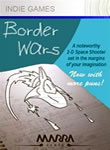
Border Wars (Xbox Live)

Horizontal
Checkpoints OFF/ON
1 Difficulty level
5 Stages
Ship speed by icons
- - - - - - -
Developed by Marra Games
Published by Marra Games in 2009


I firmly believe visual appeal is half the catch if you, as a developer, want to draw people to your game. Take Border Wars, for instance. When I saw what it was about I was hooked on the graphical concept alone. It’s a shooter that takes place on the sheets of a notebook (not the laptop synonym) with minimalist hand-made graphics amidst random annotations on calculus. How can you not be attracted to such a thing?

The bad news is that Border Wars is a bit rotten on the inside. It tries to be something different, but the attempts are poor and lack the polish to back the original idea. The game was obviously rushed out the door, and while on the surface it seems to be an odd but worthy entry into the genre there are several signs of laziness that pull it down a good notch.

Upon choosing to start a new game you’re given the chance to replace the default ship with a new one you can draw from scratch. The red rectangle defines the hitbox, but aside from that it’s possible to use the whole square to draw whatever comes to your mind. Once the game starts it seems as if the drawings in the page of the notebook come to life like a rustic cartoon, with colors used in a very stylish manner. The monochromatic tone is only left aside in the HUD and in tiny details such as bullets, items and weak points of bosses. You’re free to explore the scenery and touch walls, but don’t get crushed by them as the screen scrolls or you’ll die. Move with the left analog (no d-pad support), fire with button A, cycle special weapons with RB (R1) and use them with button B. Once the health bar is depleted you lose a life, and to recover health you can either take the random cross items released by enemies or buy health cells in-between stages.

My aim is to get to the notebook cover!

With the exception of the last stage all levels are divided into three sections and a boss fight. During the intermissions a plethora of special items can be bought using the accumulated score, including upgrades on firepower, spread capability, shot ratio, speed, ship defense and collision protection, as well as ammo for the special weapons and breathers such as health recovery and extra lives. You can even redraw the spaceship before the next section begins. There’s no need to buy ammo for special weapons, there’s plenty of them to be taken during the actual gameplay: rockets (9 maximum), bombs and temporary invincibility (3 maximum each). Extra lives also appear very often so don’t mind getting the expensive offerings of the upgrade shop.

Border Wars plays decently enough on the eyes of an observer, but controlling the ship is a whole different story. For some strange reason the developer decided to restrict movement on the X axis, making it extremely difficult and awkward to dodge stuff until you’ve bought at least one speed upgrade. This is extremely annoying and there was absolutely no need to be done. The fact that most enemies fire horizontally isn’t an excuse, and the resulting effect is that the game almost plays like a fixed horizontal shooter at the beginning. Given the fact that it does restrict the player’s movement to a vertical line during boss fights, perhaps that was the original concept.

Other hints that point to a lazy fine tuning are the way you change from an underpowered wreck to an overpowered ship once you buy the spread shot and power it up, ditching the initial pew-pew shot sound. The game even seems to lower enemy count in the last couple of stages, peaking in difficulty at stage 3. There’s an upgrade (beam projectors) that adds absolutely nothing to the ship! Once you beat the game you unlock Arcade mode, which is just the same regular mode with 1-hit deaths. The problem with it is that it still keeps that health bar and everything related to health stuff, such as shop items, and the option to play this mode disappears from the selection screen when you log off. This means you need to go through the whole game every time if you want to try Arcade mode. And despite the automatic saving after a boss is defeated, starting a new game will override the save completely. You just can’t play a new game while keeping the save intact.


And the wars were ended by a superior force...
(courtesy of YouTube user KollisionBR)

I can live perfectly with everything I mentioned in the previous paragraphs. Regular readers know that I have played far worse shmups during the course of this blog. Maybe these negative aspects stood out so much for me because, on top of everything, Border Wars is bugged to the core. Nine out of ten times I got either Code 3 or Code 4 error messages while playing stage 3-2. These errors kick the player back to the dashboard, and in all online sources I’ve researched their causes point to bad programming. There’s even old info on a patch that would correct this but none seems to have been issued, and all webpages that link back to the developer are simply abandoned. The icing on the cake is the collection of messages that pop up when you lose a life, such as “maybe next time don't suck so much”. Every time I read this I felt like a retard because I was honestly trying to complete this goddamn game.

In a nutshell, everything about Border Wars is just sad because the game had potential, but it’s nothing more than a great idea gone terribly wrong. Only the music comes out unscathed, even though it's not anything special. Graphics are okay but they could've had a stronger contrast and used more black. I don’t know why there’s a timer for each stage, since it’s impossible to time out unless you want to milk your extra lives. Just for the record, I tried this timeout milking once and the game crashed again.

On the first day I got familiar with the weapon system and continued to see the end. On the second day I tried to get the 1CC, but the game wouldn’t let me because of the errors. On the third day I had my final attempt at doing it, but I was forced to use the save from the 3rd stage to complete the run because it was impossible to play a continuous credit (the crash even happened a few times during the 4th stage). The screenshot below was taken just before I killed the final pencil boss, having bought all the available useful upgrades - the score has to be wasted on buying them, or else you can’t advance much further. Be gone, indie crap, be gone.